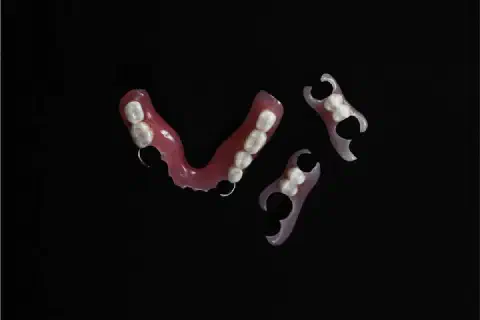
If you are missing several teeth but still have healthy ones, a cast metal partial denture is one of the most durable removable ways to fill the gaps.
Built on a thin cobalt-chromium framework, it fits precisely, feels less bulky than an acrylic partial and typically lasts many years. At Alta Loma Dental Care in Rancho Cucamonga, Dr. Sidney Lee designs cast metal partials for patients who want a long-term solution without surgery. This guide covers how they work, their pros and cons, what they cost and how to care for them. For a comparison of every option, see our dentures and partial dentures page.
Key takeaway
Cast metal partial dentures offer a strong, precise, comfortable way to replace missing teeth, and they usually outlast acrylic partials by years.
How cast metal partial dentures work
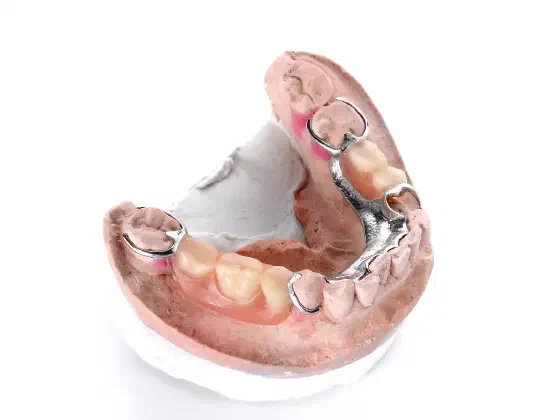
A cast metal partial is made from a lightweight metal alloy, usually cobalt-chromium, that is cast to fit the exact contours of your mouth. The framework carries the replacement teeth and gum-colored acrylic, and small clasps and rests grip your remaining natural teeth so the partial stays put when you chew and speak.
- Best for: patients with some healthy teeth who want a removable, durable option for several missing teeth.
- Not ideal when: you are likely to lose more teeth soon (adding teeth to a metal framework is limited) or when the clasp teeth are themselves loose or heavily damaged.
Benefits of cast metal partial dentures
- Strength. The metal framework resists wear and rarely breaks.
- Comfort. The framework is thinner than acrylic, so there is less bulk against your palate and tongue, and the precise fit minimizes sore spots.
- Better sensation. Less coverage means you taste food and feel temperature more normally.
- Natural appearance. The replacement teeth are shaded to match your own.
- Function. Chewing and speech improve, and filling the gaps helps keep your remaining teeth from drifting.
The fitting process
- Consultation. Dr. Lee examines your remaining teeth, gums and bone, takes X-rays and confirms which teeth will support the clasps.
- Preparation and impressions. Small rest seats may be shaped in the clasp teeth, and precise impressions are taken for the dental laboratory.
- Framework try-in. The cast framework is checked in your mouth for fit before the teeth are added.
- Delivery and adjustments. The finished partial is fitted, and we fine-tune the clasps and acrylic over the following weeks.
The process usually takes two or three visits over a few weeks.
Comparing your options
- Vs. acrylic partials: cast metal is stronger, thinner and longer-lasting, but costs more and takes longer to make.
- Vs. flexible partials: cast metal gives firmer support and a more precise bite; flexible partials have no visible metal and suit patients with metal sensitivity.
- Vs. a bridge: a bridge is fixed in place but requires reshaping the neighboring teeth and suits smaller gaps.
- Vs. dental implants: implants are fixed, preserve bone and last longest, but cost more and require surgery.
Cast metal partials typically cost $1,500–$2,500, and insurance often covers about 50% up to your annual maximum. These are typical ranges; your written estimate depends on the exam, X-rays and your insurance.
Caring for your cast metal partial
- Clean daily with a soft brush and denture cleaner; toothpaste is too abrasive.
- Soak nightly in denture solution to keep the acrylic from drying out, and avoid hot water.
- Clean your natural teeth carefully, especially around the clasps, where plaque collects.
- Do not bend the clasps yourself. If the partial feels loose or tight, we can adjust it.
- Keep regular checkups so we can reline the partial as your gums change and check the health of the clasp teeth.
Ready to learn more?
Call Alta Loma Dental Care at (909) 987-6268 or request an appointment online to find out whether a cast metal partial is the right fit for you. Our office is at 7283 Carnelian St, Rancho Cucamonga, CA 91701.
Prices mentioned on this page are typical ranges for planning purposes only. Your written estimate depends on the exam, X-rays and your insurance benefits, and we confirm costs with you before any treatment begins.