Deciding between clear aligners and traditional braces is a big step in your orthodontic journey. Both are proven treatments for straightening teeth and improving your smile, but they come with different benefits, limitations and lifestyle considerations.
Choosing the right option can affect not only the outcome but also how comfortable and confident you feel throughout the process.
At Alta Loma Dental Care, proudly serving Rancho Cucamonga, Alta Loma and neighboring communities, we know that every patient’s smile is unique. We use SureSmile® clear aligners, and that page covers cost, timelines and aligner care in detail. In this guide, we’ll help you understand the differences between clear aligners and braces so you can make an informed decision that fits your dental needs and lifestyle.
Key Takeaways
- How do clear aligners work? Clear aligners use a series of clear, removable trays to gently straighten teeth, offering a discreet alternative to traditional braces.
- Both clear aligners and braces correct a wide range of orthodontic issues, but braces are generally better suited to complex cases.
- Clear aligners offer greater comfort, flexibility and easier oral hygiene because they are removable, while braces provide reliable treatment for severe misalignments.
- Treatment times vary: clear aligners typically take 6 to 18 months, whereas braces usually take 1 to 3 years, depending on complexity.
- Costs for clear aligners and braces are comparable, and Alta Loma Dental Care in Rancho Cucamonga offers competitive pricing and personalized plans.
- Clear aligners are especially popular among adults and professionals in Rancho Cucamonga, Alta Loma and nearby areas who want a discreet, flexible option.
- Choosing the right treatment takes a professional evaluation from an experienced dentist like Dr. Lee.
- Excellent oral hygiene and following your dentist’s instructions are essential for successful results with either option.
- If you’re unsure which option is best for your smile goals, schedule a consultation with Alta Loma Dental Care to explore your personalized treatment plan.
What Exactly Are Clear Aligners and Braces?
Clear Aligners: Straightening Without Brackets
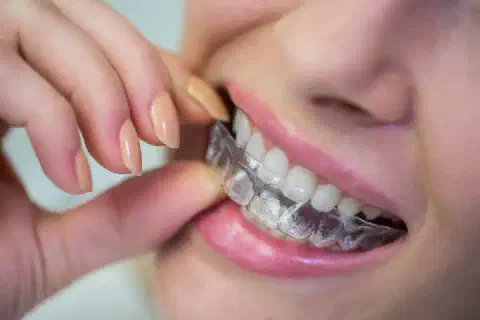
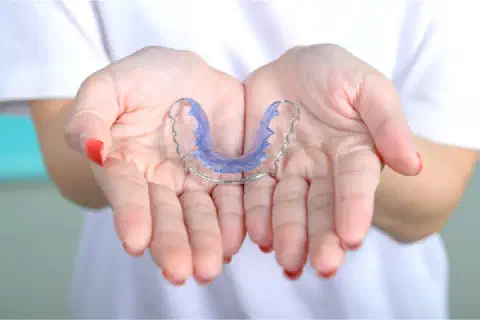
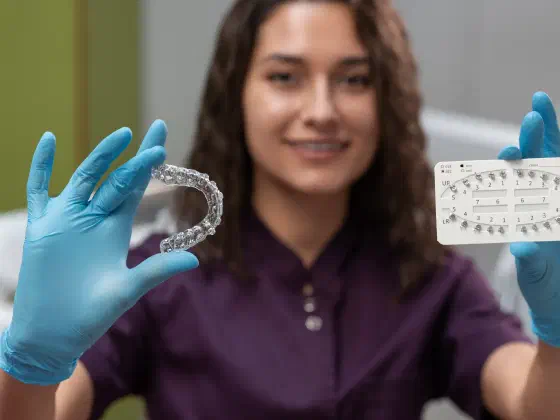
Clear aligners are an orthodontic treatment that uses custom-made, clear plastic trays to gradually shift your teeth into proper alignment. The trays are made from a digital scan of your teeth, fit snugly over them and are nearly invisible when worn. At our office we use SureSmile® aligners from Dentsply Sirona.
Unlike traditional braces, aligners are removable, so you can eat, drink, brush and floss with ease. Treatment involves switching to a new set of aligners every 1 to 2 weeks, with each set applying gentle pressure to move your teeth closer to their planned position.
Braces: The Tried-and-True Classic
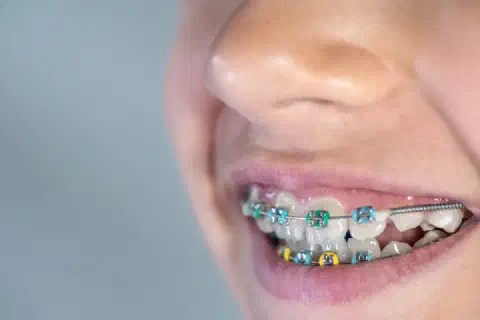
Braces have been the go-to orthodontic treatment for decades. They consist of metal brackets bonded to your teeth and connected by wires. The wires are adjusted periodically to move your teeth over time.
Modern braces have evolved significantly and now come in several types, including ceramic (tooth-colored) braces and lingual braces (placed behind the teeth), but metal braces remain the most common and effective for a wide range of orthodontic issues.
Key Differences Between Clear Aligners and Braces
| Feature | Clear Aligners | Braces |
|---|---|---|
| Appearance | Nearly invisible clear plastic | Metal brackets and wires visible |
| Removability | Removable for eating and cleaning | Fixed; cannot be removed |
| Comfort | Smooth, less mouth irritation | May cause sores and irritation |
| Food Restrictions | None, remove aligners when eating | Avoid sticky, hard, or chewy foods |
| Oral Hygiene | Easier to brush and floss | Requires special cleaning tools |
| Office Visits | Fewer, about every 6–8 weeks | More frequent, about every 4 weeks |
| Treatment Time | 6–18 months, varies by case | 1–3 years, depending on severity |
| Suitable for Complex Cases | Limited, best for mild/moderate | Effective for all cases |
| Cost | Comparable, may vary | Comparable, varies by case |
Which Dental Issues Can Clear Aligners and Braces Fix?
Both clear aligners and braces can treat many common orthodontic problems, including:
- Crowded or Overlapping Teeth: Teeth that are too close together or overlapping can cause discomfort and oral hygiene challenges.
- Gaps Between Teeth: Spaces that affect appearance and can trap food.
- Bite Problems: Including overbite, underbite, crossbite and open bite, which affect chewing and jaw health.
- Misaligned or Rotated Teeth: Teeth that are twisted or out of place.
While clear aligners are effective for many mild to moderate cases, braces are often recommended for more complex issues, such as significant bite corrections, severely rotated teeth or cases involving jaw surgery. Our guide to what dental problems clear aligners can fix goes through each condition.
Appearance and Lifestyle Considerations
Clear Aligners: Subtle and Flexible
One of the biggest reasons patients choose clear aligners is that they are nearly invisible. This makes them especially popular among adults and professionals who want to straighten their teeth without drawing attention to their treatment.
Because the trays are removable, you can keep eating your favorite foods. Just remove the aligners before eating or drinking anything other than water, then brush your teeth before putting them back in. This flexibility makes it easier to keep up your usual oral hygiene routine, reducing the risk of cavities and gum disease during treatment.
Braces: Highly Effective but Noticeable
Traditional braces are fixed and more visible, which can make some patients self-conscious. However, braces are very effective at treating a wide range of orthodontic problems and have stood the test of time as the most common method for straightening teeth.
Food restrictions matter with braces: sticky candies, popcorn and hard foods can damage the brackets and wires, which might prolong treatment or cause discomfort.
Brushing and flossing take extra care, with tools like interdental brushes and floss threaders to keep teeth and gums healthy throughout treatment.
Comfort and Oral Hygiene
Comfort
Clear aligners: The smooth plastic trays generally cause less irritation to your cheeks and gums than metal braces. You may feel slight pressure when switching to a new set, but this discomfort is usually mild and temporary.
Braces: The brackets and wires can sometimes cause sores or irritation inside the mouth, especially after adjustments. Orthodontic wax can help.
Oral Hygiene
Excellent oral hygiene is critical for both treatments, but clear aligners make it easier because you can remove them to brush and floss normally. With braces, extra care and time are needed to clean around brackets and wires to prevent plaque buildup and tooth decay.
Treatment Time: How Long Does Each Take?
Treatment length depends on the complexity of your orthodontic issues:
Clear aligners: Most treatments range from 6 to 18 months. Consistency is key: you need to wear your aligners about 22 hours a day for the best results.
Braces: Traditional braces often take 12 to 36 months, though minor cases may be shorter. Because braces are fixed, treatment continues without depending on you to wear them.
Cost Comparison
Cost varies with the severity of your orthodontic problems and the length of treatment. In general:
- Clear aligners and braces tend to be similarly priced, though aligners can cost somewhat more depending on your case.
- At Alta Loma Dental Care, we offer competitive pricing and flexible payment plans to help make your orthodontic treatment affordable.
Age and Lifestyle Factors
Adults and Teens: Who Benefits More from Which?
- Adults: The discreet look and removability of clear aligners often make them the preferred choice for adults concerned about appearance and lifestyle.
- Teens: Clear aligners are a popular alternative for teens who will wear them consistently, but some teens prefer or need braces depending on their dental needs.
Active Lifestyles and Sports
For active people and athletes, clear aligners can be removed during sports, reducing the risk of injury from metal braces. However, it’s essential to wear your aligners as prescribed to avoid delaying treatment.
The Importance of Professional Guidance
Choosing between clear aligners and braces isn’t always straightforward. A thorough evaluation by an experienced dentist or orthodontist is essential to find the most effective treatment plan for your case.
At Alta Loma Dental Care, Dr. Lee conducts a comprehensive examination, including digital scans and X-rays, to recommend the best option for your oral health and smile goals.
Taking the Next Step
If you’re ready to improve your smile but unsure whether clear aligners or braces are right for you, Alta Loma Dental Care is here to help.
Call us at (909) 987-6268 or book your consultation online to schedule your appointment in Rancho Cucamonga, Alta Loma or nearby communities.
Our friendly team will guide you through your options, costs and timeline, making the path to a healthier, straighter smile simple and stress-free.
References:
Take the first step toward your dream smile today! Call Alta Loma Dental Care at (909) 987-6268 or schedule your consultation online.
Prices mentioned on this page are typical ranges for planning purposes only. Your written estimate depends on the exam, X-rays and your insurance benefits, and we confirm costs with you before any treatment begins.