A cold sore always seems to appear at the worst time: the day before a wedding, an interview or your dental appointment.
Cold sores are caused by the herpes simplex virus (HSV-1) and are extremely common; many adults carry the virus from childhood. This guide covers what cold sores are, how to shorten an outbreak, how to prevent the next one, and what to do when one shows up before a dental visit.
Key Takeaways
- Cold sores are viral blisters on or near the lips, triggered by stress, sun, illness or lip trauma, including dental work.
- Treatment started at the first tingle works best; prescription antivirals shorten outbreaks.
- If you have an active cold sore before a routine dental visit, call us; rescheduling is usually best.
- See a dentist or physician for sores that last more than two weeks, frequent outbreaks or sores near the eye.
What Is a Cold Sore?
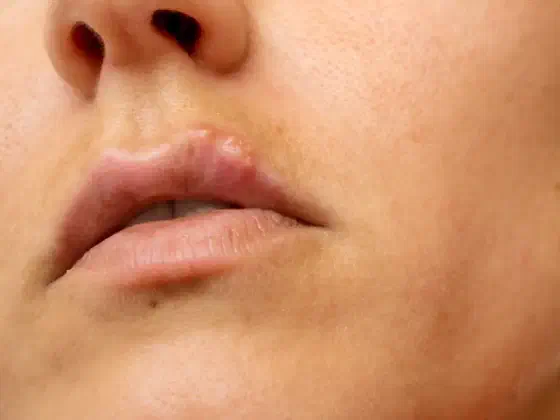
A cold sore is a small, fluid-filled blister that usually appears on or around the lips. It is caused by HSV-1, which stays dormant in nerve cells after the first infection and reactivates when triggered by stress, fatigue, fever, hormonal changes, lip injury or strong sun, a common trigger in Rancho Cucamonga’s climate.
Recognizing the stages
Cold sores follow a pattern: tingling or burning, then a cluster of blisters, then weeping and crusting as they heal over 7–10 days. They are contagious from the first tingle until the scab is gone.
Cold sore or canker sore?
Cold sores sit on the outside of the mouth and are contagious. Canker sores are ulcers inside the mouth (cheeks, tongue, gums), are not contagious and are not caused by a virus. The treatments differ, so if you are unsure, ask at your next visit.
Treatment Options
- Over-the-counter antiviral cream (docosanol) shortens healing by a day or two if applied at the first tingle.
- Prescription antivirals such as valacyclovir or acyclovir are the most effective option, especially when started within 48 hours; your physician or Dr. Lee can prescribe them.
- Comfort measures: ice or a cool compress, over-the-counter pain relievers, a topical numbing gel and a bland lip balm.
- Laser therapy: a brief low-level dental laser session can be used on an early cold sore to ease discomfort; ask whether it is an option for you.
Fully healing a cold sore in 24 hours is not realistic, but acting at the first tingle noticeably shortens the outbreak.
Cold Sores and Your Dental Appointment
Dental work can trigger a cold sore, and an active sore makes treatment uncomfortable: stretching the lip is painful, can split the blister and can spread the virus to other parts of the mouth or to staff. If you feel a cold sore coming on before a routine visit, call (909) 987-6268 and we will usually reschedule for after it has healed; our new patients page lists office hours and what to expect at a visit. If you are in pain or have an urgent problem, we will still see you and take extra precautions.
Preventing the Next Outbreak
- Wear lip balm with SPF 30 or higher, especially outdoors.
- Manage stress and sleep; both are common triggers.
- Do not share cups, utensils, razors or lip products, and wash your hands after touching a sore.
- If you have frequent outbreaks (roughly six or more a year), ask your physician about daily suppressive antiviral therapy.
- Keep up with regular dental exams, where we check the lips and soft tissues as part of every visit.
When to See a Dentist or Physician
Get care if a sore has not healed within two weeks, outbreaks are frequent or severe, a sore is unusually large or painful, you have a weakened immune system, or a sore spreads toward the eye, which needs urgent medical attention. Call (909) 987-6268 during office hours or request an appointment online.