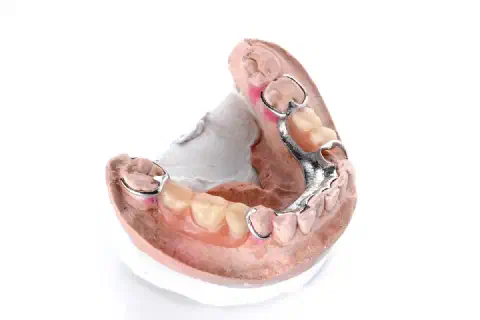
Traditional partial dentures work well, but some patients dislike the bulk of acrylic or the look of metal clasps.
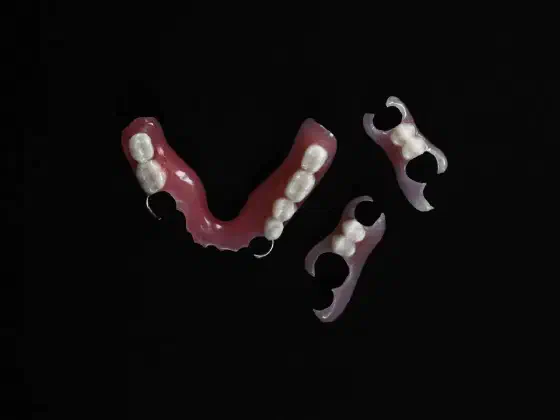
Flexible partial dentures solve both problems with a thin, lightweight nylon base and gum-colored clasps that are nearly invisible when you smile. At Alta Loma Dental Care in Rancho Cucamonga, Dr. Sidney Lee often recommends them for patients who want the most comfortable, natural-looking removable option. This guide covers how they work, their pros and cons, typical cost and care. For a side-by-side look at every option, see our dentures and partial dentures page.
Key takeaways
- Flexible partials are thin, light and free of metal, so they are comfortable and blend in with your gums.
- They typically last 5–8 years, longer than acrylic partials but not as long as cast metal.
- They are harder to repair than other partials and are not right for every case.
- Proper cleaning with products made for flexible dentures keeps them looking natural.
What are flexible partial dentures?
Flexible partial dentures are made from a thermoplastic nylon material rather than rigid acrylic or a cast metal framework. The material flexes slightly, which lets the partial slip comfortably over your remaining teeth and adapt to the shape of your gums. The clasps are part of the same gum-colored material, so there is no metal to show when you smile. They are used to replace one or several missing teeth in patients who still have healthy natural teeth to support them. Depending on your situation, dental implants or crowns and bridges may also be worth considering.
Benefits of flexible partial dentures
- Comfort. The flexible material reduces gum irritation and pressure points, and the partial is light.
- Natural look. Gum-colored clasps and a translucent base blend with your own gums and teeth.
- Fracture resistance. Unlike acrylic, the material does not crack easily if dropped.
- No metal. A good option for patients with metal sensitivity or who simply prefer no visible metal.
Drawbacks to consider
- The material can stretch over time, so the fit may loosen and need relining.
- Repairs and additions are more difficult than with acrylic or cast metal partials, and significant damage usually means replacement.
- Flexible partials provide less rigid support than a cast metal framework, so they are not the best choice for every bite or for very long spans of missing teeth.
- They require cleaners made for flexible dentures; standard denture pastes can dull the material.
How they compare
| Type | Typical cost | Durability | Appearance |
|---|---|---|---|
| Acrylic partial | $599–$1,200 | 3–5 years | Good; clasps may show |
| Cast metal partial | $1,500–$2,500 | 10+ years | Slim; small metal clasps |
| Flexible partial | $999–$1,800 | 5–8 years | No visible metal clasps |
Dental insurance often covers about 50% of a partial denture up to your annual maximum. These are typical ranges; your written estimate depends on the exam, X-rays and your insurance.
What to expect
- Consultation. Dr. Lee examines your teeth and gums, takes X-rays and confirms that a flexible partial suits your case.
- Impressions and shade matching. Precise impressions go to the laboratory, and the tooth and gum shades are matched to yours.
- Delivery. The partial is fitted and any spots that rub are adjusted. Most patients adapt within a few days.
- Follow-up. We check the fit at your regular visits and reline when needed.
How to care for your flexible partial dentures
- Clean daily with a soft brush and a non-abrasive cleaner made for flexible dentures; toothpaste is too harsh.
- Soak overnight in a solution intended for flexible partials, and avoid hot water.
- Rinse after meals to remove food particles.
- Care for your natural teeth around the clasps, where plaque collects.
- Visit us regularly. Checkups let us confirm the fit and keep your gums and remaining teeth healthy.
Ready to find out if they are right for you?
Call Alta Loma Dental Care at (909) 987-6268 or request an appointment online. We are located at 7283 Carnelian St, Rancho Cucamonga, CA 91701, and we will help you compare flexible, acrylic and cast metal partials with fixed options such as bridges and implants.
Prices mentioned on this page are typical ranges for planning purposes only. Your written estimate depends on the exam, X-rays and your insurance benefits, and we confirm costs with you before any treatment begins.