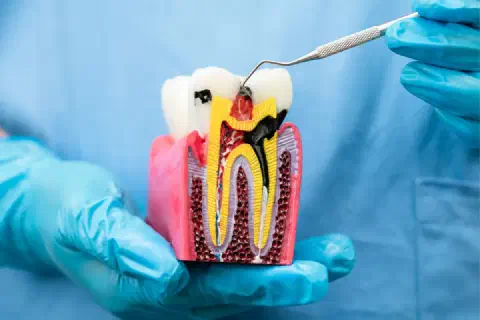

How to remove tartar from teeth without a dentist—it is a question many people have searched at some point.
Maybe you have noticed a yellow or brown crust near your gumline, or you are hoping to save a trip to the dental chair. Here is the honest answer: home remedies can help prevent tartar, but once it has formed, only a professional cleaning removes it safely. This guide explains what tartar is, what you can and cannot do at home, and what a cleaning at Alta Loma Dental Care involves.
Key Takeaways
- Tartar is hardened plaque; it bonds to enamel and cannot be brushed or scraped off safely at home.
- Home remedies help with plaque and prevention, not with existing tartar.
- DIY scrapers can scratch enamel, cut gums and push tartar under the gumline.
- A professional cleaning removes tartar above and below the gumline in about an hour.
What Is Tartar and Why Should You Care?
Tartar, also called dental calculus, starts as plaque—the soft, sticky bacterial film that forms on your teeth within hours of brushing. When plaque is not removed, minerals in your saliva harden it into tartar within a few days. You will notice it as rough, yellow or brown deposits, usually along the gumline and behind the lower front teeth. Our plaque and biofilm guide explains how that film forms in the first place.
Tartar is more than a cosmetic problem. It:
- Irritates the gums, leading to gingivitis and, if ignored, periodontitis
- Traps bacteria against the enamel, raising your risk of cavities
- Causes persistent bad breath
- Stains easily, dulling your smile
Because tartar is porous, it collects even more plaque, so the problem accelerates the longer it sits.
What causes tartar to build up?
- Inconsistent brushing and flossing—plaque left for more than a day or two starts to mineralize
- Sugary and starchy diets that feed plaque bacteria
- Dry mouth from medications or dehydration
- Smoking or vaping, which speeds tartar formation and stains it darker
- Skipped cleanings—some tartar forms even with good home care, and only a hygienist can remove it
Can You Remove Tartar at Home? Let’s Look at the Options
You have probably seen the hacks online—baking soda scrubs, oil pulling, vinegar rinses, even metal scrapers. Here is what each one really does.
Baking soda: a gentle scrub?
Baking soda’s mild grit can polish away surface stains and soften fresh plaque. Tartar is too hard for it. Overdo it and you can wear down enamel, leaving teeth sensitive. Use it occasionally at most, and never as a scrub for hardened deposits.
Oil pulling: an ancient trick
Swishing coconut oil for 10–15 minutes may freshen breath and loosen some plaque, and some studies suggest a modest benefit for gum health. It cannot break the bond between tartar and enamel.
Flossing: the daily must
Flossing clears plaque from between teeth where brushes miss, which stops tartar from forming there. Once tartar has hardened, floss slides over it. Keep flossing—prevention is where it shines.
Tartar-control toothpaste and electric toothbrushes
Toothpastes with pyrophosphates slow the mineralization of plaque, and an electric toothbrush removes more plaque than a manual brush. Both reduce how much tartar forms between visits. Neither removes tartar that is already there.
Vinegar, peroxide and other rinses
Apple cider vinegar and hydrogen peroxide are acidic and can erode enamel if used often. They may lighten stains slightly, but tartar stays put. You do not want to trade one problem for another.
Dental scrapers sold online
Skip these. Without training you are likely to scratch the enamel (creating rough spots where more plaque sticks), cut or bruise the gums, push tartar deeper under the gumline, or miss most of the deposits entirely. Repairing that damage costs far more than a cleaning.
Why Home Remedies Aren’t Enough
- Tartar hides below the gumline. You cannot see or reach it with a toothbrush or floss, and that is where gum disease starts.
- The tools that work require training. Hygienists use specific angles and pressure to remove deposits without harming enamel or gum tissue.
- You miss the bigger picture. A cleaning comes with an exam that catches cavities, gum disease and oral cancer early.
- Short-term wins, long-term losses. Home fixes may feel productive, but tartar keeps building unless it is fully removed.
Think of it like cleaning your car: a quick wipe-down helps, but deep grime needs a professional detailer.
How a Professional Cleaning Removes Tartar
A routine cleaning at Alta Loma Dental Care takes about 30–45 minutes with the hygienist plus a short exam with Dr. Lee:
- Ultrasonic scaling. A vibrating tip with a fine water spray breaks tartar off the teeth, including just below the gumline.
- Hand scaling. Curettes remove any remaining deposits from tight spots.
- Polishing. A fine paste smooths the enamel so new plaque has a harder time sticking.
- Fluoride (optional) to strengthen enamel.
If tartar has built up deep below the gums and your gums show signs of periodontitis, we may recommend scaling and root planing—a deep cleaning done with local anesthetic, sometimes over two visits. Learn more on our gum disease treatment page.
Most patients find cleanings comfortable. If your teeth are sensitive or it has been a while, tell us; we can adjust our technique or use a numbing gel.
What Does Tartar Removal Cost?
A routine cleaning (prophylaxis) typically costs $75–$200 and is covered at or near 100 percent by most dental insurance plans, usually twice a year. A deep cleaning for gum disease runs $200–$400 per quadrant and is typically covered at 50–80 percent. These are typical ranges; your written estimate depends on the exam, X-rays and your insurance. We verify your benefits before your visit and explain any out-of-pocket costs upfront.
How to Keep Tartar from Coming Back
Between cleanings, prevention is entirely in your hands:
- Brush twice a day for two minutes with fluoride toothpaste—an electric brush helps
- Floss every day, or use a water flosser if string floss is difficult
- Use a tartar-control toothpaste and, if we recommend it, an antimicrobial mouthwash
- Limit sugary and starchy snacks, and drink water after meals
- Chew sugar-free xylitol gum when you cannot brush
- Don’t smoke or vape
- Keep your exam and cleaning appointments every six months—or every three to four months if you build tartar quickly
For a complete daily plan, see our oral hygiene routine guide.
Conclusion: Your Smile Deserves the Real Thing
How to remove tartar from teeth without a dentist? You can slow it down and prevent it, but you cannot safely remove it yourself. A professional cleaning is quick, comfortable and usually covered by insurance—and it comes with a full checkup.
Call Alta Loma Dental Care at (909) 987-6268 during office hours, Monday through Friday, 9 AM to 5 PM, or book online. We are at 7283 Carnelian St, Rancho Cucamonga, CA 91701.
Prices mentioned on this page are typical ranges for planning purposes only. Your written estimate depends on the exam, X-rays and your insurance benefits, and we confirm costs with you before any treatment begins.