Mewing is a tongue-posture technique where you rest your entire tongue — including the back third — against the roof of your mouth, keep your lips gently sealed, and breathe through your nose. Developed from orthotropic theory by British orthodontist Dr. John Mew and popularized on social media, mewing is promoted as a natural way to support facial balance, airway health, and jawline definition — though scientific evidence for dramatic results remains limited.
That simple tongue-to-palate posture is exactly what turned mewing into a viral sensation on TikTok, Instagram, and YouTube, where clips promise a “chiselled jawline” without surgery, fillers, or braces. The trend has racked up hundreds of millions of views, becoming one of the most searched facial-aesthetics topics of the past few years — especially among teens and young adults chasing a non-invasive way to sharpen their profile. Yet viral attention and clinical reality don’t always line up, which is why patients across Rancho Cucamonga, Upland, and Fontana regularly ask us at Alta Loma Dental Care what mewing actually does, what the science supports, and whether it’s safe to try alone. Here’s an honest, evidence-grounded look — no hype, no miracle promises.
Key Takeaways
- Mewing is about proper tongue posture and nasal breathing — not quick aesthetic fixes.
- Scientific evidence is limited: it may support breathing and posture, but it won’t reshape adult bone structure.
- Gentle practice is key; forcing the technique can strain your jaw or shift your teeth.
- Mewing cannot replace orthodontic care for bite, alignment, or TMJ issues.
- Realistic expectations matter — small improvements, when they happen, come from posture and soft-tissue changes, not skeletal remodeling.
1. What Is Mewing? Origins & Concept
Mewing comes from orthotropics, a school of thought introduced by British orthodontist Dr. John Mew and later popularized online by his son, Mike Mew. The core idea is surprisingly simple:
Rest your entire tongue — including the back third — against the roof of your mouth, keep your lips gently sealed, and breathe through your nose.
Proponents argue that holding this posture over months and years gently guides the maxilla (upper jaw) forward and upward, improving facial balance, airway width, and jawline definition. The theory draws on a long-standing observation in dentistry: that tongue position, breathing mode, and facial growth really are connected.
What’s less clear is whether self-taught mewing — as practiced by millions on social media — can deliver the structural changes its loudest promoters claim. Orthotropic theory has deep roots, but mewing as a DIY trend is a different animal: unsupervised, unstandardized, and often marketed with before-and-after photos that overpromise.
2. What Does the Evidence Actually Say?
This is where it helps to separate the plausible from the proven.
What we do have
- Tongue position affects muscle activation. Studies using electromyography (EMG) have looked at how different tongue postures engage the muscles of the jaw and floor of the mouth. One such study found no significant change in masseter (cheek) muscle activity across tongue positions, though some differences appeared in the suprahyoid muscles beneath the chin.
- Proper tongue rest posture is widely accepted as healthy. Dentists and orthodontists generally agree that resting the tongue gently on the palate — not thrusting against the teeth — supports nasal breathing, normal swallowing, and oral health.
- Mouth breathing is a real problem. There’s solid evidence that chronic mouth breathing, especially in children, can narrow the palate, lengthen the face, and crowd the teeth. Anything that encourages nasal breathing, including better tongue posture, sits on firmer scientific ground.
What’s missing or weak
- No rigorous trials show adult facial reshaping. There is currently no high-quality clinical trial proving that mewing remodels the jaw, moves bone in fully grown adults, or produces dramatic aesthetic change.
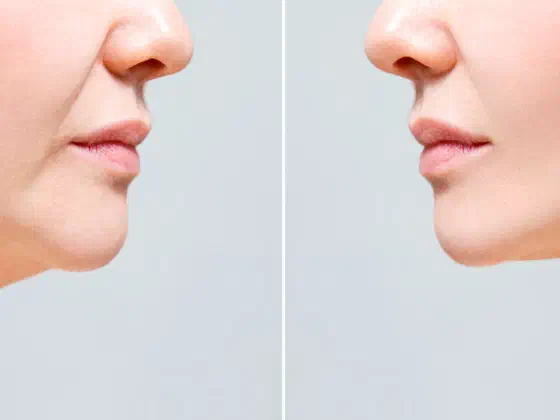
- Before-and-after photos are unreliable evidence. Lighting, angle, weight loss, posture shifts, puberty, and even unrelated dental work can all transform a “before” into an “after” — without mewing doing the work.
- It oversimplifies complex structures. Critics point out that mewing treats malocclusion, jaw asymmetry, and skeletal discrepancies as posture problems, when in reality bones, muscles, growth patterns, and genetics interact in ways a tongue exercise can’t redirect.
- Forced technique can backfire. Pressing the tongue hard against the teeth or clenching to “hold” the posture can cause bite changes, tooth movement, and TMJ (jaw joint) pain.
The bottom line: mewing as commonly practiced is not supported by strong evidence. It’s speculative — promising in theory, unproven in practice, and never a substitute for evidence-based orthodontic care.
3. Risks, Limitations & Managing Expectations
Before you commit to a daily posture practice, here are the honest cautions:
- Adult bones are set. Once your growth plates fuse (typically in your late teens), meaningful bone remodeling from posture alone isn’t realistic. The structure you have is largely the structure you keep.
- More force is not better. Gentle rest posture is the whole point. Pushing harder doesn’t accelerate results — it invites strain, misalignment, and discomfort.
- Changes are subtle, if they come at all. What you might notice: slightly better posture, easier nasal breathing, maybe a small soft-tissue shift. What you won’t get: a “jaw implant” effect.
- It’s not a substitute for dental care. Bite issues, malocclusion, and TMJ problems need an orthodontist or oral surgeon — not a tongue exercise.
- Mind the mindset. Chasing appearance changes can sometimes feed dissatisfaction rather than ease it. A balanced, health-first approach tends to serve people better.
4. How to Try Mewing Safely
If you’re curious and have no jaw or TMJ issues, here’s a conservative, low-risk way to explore the technique.
Tongue posture
Rest your whole tongue gently against the roof of your mouth — not just the tip. Aim for contact across the mid and back tongue, without pressing hard. A helpful cue: say the word “sing” and hold the “ng” sound — that’s where the back of your tongue should sit.
Lips, teeth & breathing
Keep your lips lightly closed, teeth slightly apart (or in a natural, gentle touch), and breathe through your nose. If you can’t comfortably nasal-breathe, that’s a sign to address congestion first — not to push through.
Neck & head alignment
Good tongue posture rides on good overall posture. Keep your head level, not jutted forward or tilted down toward a phone. A forward head position works against everything else.
Swallowing awareness
On each swallow, let the tongue rise gently and naturally. Avoid thrusting it forward against your teeth — that’s the pattern that can push teeth out of alignment over time.
Consistency over force
The goal is gentle rest posture throughout the day, especially when you’re calm and at rest. It’s not an “exercise” you crank out in reps — it’s a habit you ease into.
Track honestly
If you want to document changes, take consistent photos (same lighting, same angle) and note how your breathing and comfort feel. Keep expectations modest; most people see little visible change.
Stop if it hurts
Tooth pain, jaw soreness, clicking, or headaches are signals to stop and consult a professional — not signs to “push through.”
Want a quick visual guide? This short video breaks down the basics of mewing in under a minute: Watch on YouTube
5. Mewing vs. Professional Care
When there’s a real structural or functional issue, here’s how DIY mewing stacks up against evidence-based treatment:
| Issue | Mewing (DIY) | Professional care |
|---|---|---|
| Mild asymmetry / subtle aesthetic tweak | May help posture & soft tissue; results uncertain | Orthodontics, skeletal expansion, or orthognathic surgery |
| Malocclusion (misaligned teeth / bite) | Not reliable | Braces, clear aligners, or surgical correction |
| TMJ pain / joint issues | May help if posture is a factor; risky if misused | Targeted therapy, splints, braces, or surgery |
| Breathing / airway problems | Nasal-breathing focus is beneficial, but structural airway issues need specialist evaluation | ENT, sleep medicine, surgical airway evaluation |
The pattern is clear: the more structural the problem, the less mewing can do — and the more important a professional becomes.
6. What People in Rancho Cucamonga Should Know
- Get a real baseline first. Before investing months in a posture hack, a quick evaluation — with panoramic or cephalometric imaging — can tell you what’s actually going on with your bone structure, bite, and airway. You can’t plan a journey without knowing your starting point.
- Local allergy seasons matter. San Bernardino County’s spring pollen and dry Santa Ana winds make mouth breathing more likely for many residents. Prioritizing nasal breathing is worthwhile regardless of mewing — and treating congestion may matter more than any tongue exercise.
- Be skeptical of local hype. Whether it’s a gym conversation, a forum thread, or a paid “mewing coach,” treat miracle promises with caution. If a claim sounds too good to be true, it usually is.
- Kids need a different standard. If you’re a parent considering this for your child, skip the DIY route entirely. Early orthodontic and airway evaluation — ideally around age 7 — is the evidence-based path for facial development concerns.
What to Do Next
Mewing isn’t dangerous when practiced gently, and the underlying emphasis on nasal breathing and tongue posture is genuinely sound. But it’s not a replacement for professional care, and the dramatic results you see online are the exception — if they’re real at all.
The smartest move is to pair light, gentle posture practice with a professional assessment of your bite, jaw, and airway. At Alta Loma Dental Care, Dr. Lee helps patients across Rancho Cucamonga set realistic expectations and find the treatment that actually fits their goals — whether that’s orthodontics, airway care, or simply reassurance.
Request an appointment to get started, or call us at (909) 987-6268.