At Alta Loma Dental Care, we understand that rotten teeth are more than a dental problem—they can affect every part of your life.
Severe tooth decay can take away your confidence and your peace of mind, and it often keeps people away from the very care that would help. This guide covers the causes, symptoms, treatment and prevention of rotten teeth, along with an honest look at their emotional toll and how to move past it.
Key Takeaways
- Rotten teeth are the result of bacteria breaking down enamel and dentin over time.
- Watch for pain, sensitivity, discoloration, bad breath and visible holes.
- Treatments range from fillings to root canals and crowns—there is help at every stage.
- Prevention is straightforward: brush, floss, cut sugar and see your dentist regularly.
- The emotional impact is real, but healing starts with understanding and action.
What Causes Rotten Teeth?
Rotten teeth do not appear overnight. They are the end result of factors you can usually control:
- Poor oral hygiene: Skipping brushing or flossing lets plaque thrive and harden into tartar.
- Sugary and acidic diets: Bacteria feed on sugar and produce acid that dissolves enamel; acidic drinks soften it further.
- Dry mouth: Less saliva—from medications, dehydration or mouth breathing—weakens your natural defenses.
- Tobacco: Smoking and chewing tobacco increase decay and gum disease.
- Genetics: Softer enamel and deep grooves can run in families.
- Long gaps between visits: Small cavities grow unchecked when no one is looking.
The decay process
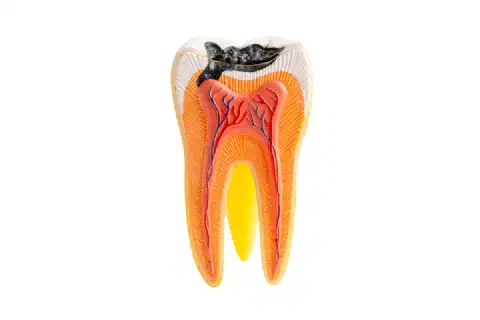
Tooth decay unfolds in stages: demineralization (white spots), enamel breakdown (a cavity forms), dentin damage (sensitivity and pain grow), pulp infection (constant pain) and finally abscess. Our guide to tooth decay stages and symptoms walks through each stage in detail. Early intervention stops this progression at any point.
Symptoms to Watch For
Rotten teeth usually announce themselves with clear signs:
- Pain: A nagging ache, worse with eating or at night.
- Sensitivity: Sharp reactions to hot, cold or sweets.
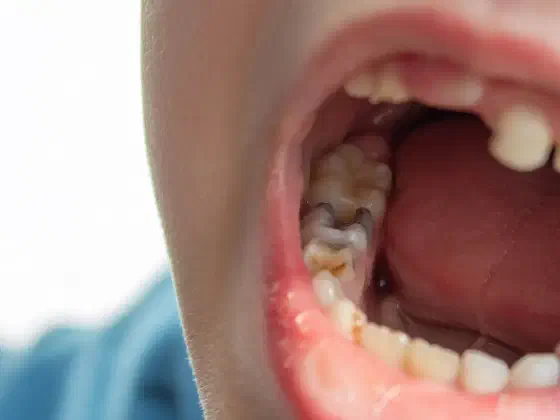
- Discoloration: Brown or black spots, or a tooth that looks gray.
- Bad breath: A persistent odor that brushing cannot mask.
- Holes: Cavities you can see or feel with your tongue.
- Swelling or pus: Signs of infection that need prompt attention.
If you notice these, do not wait—call us at (909) 987-6268.
Diet’s role in decay
Your food choices matter. Candy, soda and pastries fuel bacteria; citrus and soft drinks erode enamel; dried fruit and gummies cling to teeth. Protect your smile with cheese and yogurt (they neutralize acid), crunchy vegetables (they scrub teeth naturally) and water (it rinses away debris). Our nutrition guide for healthy teeth and gums has more.
Treatment Options
There is a solution for every level of decay:
- Fillings: Remove the decay and restore small to medium cavities in one visit ($150–$350 per tooth).
- Crowns: Protect teeth with large areas of damage ($800–$2,000).
- Root canals: Save teeth whose nerve has become infected, usually followed by a crown ($800–$1,500).
- Extractions: A last resort when a tooth cannot be saved, with replacement options such as implants, bridges or dentures ($150–$600 for the extraction).
These are typical ranges; your written estimate depends on the exam, X-rays and your insurance. Most plans cover 50–80 percent of necessary treatment, and we prioritize the most urgent teeth first so care can be spread over time. Learn more about your options on our fillings and restorations page.
Our tools
We use digital X-rays for precise, low-radiation imaging and CEREC technology for same-day custom crowns, so many repairs are completed in a single visit. Explore our same-day crown technology.
Prevention Made Simple
Keep decay away with these habits:
- Brush twice a day with fluoride toothpaste, for two minutes, with soft bristles—and include your tongue.
- Floss daily, curving the floss around each tooth; interdental brushes work well for larger gaps.
- Cut sugar: Limit sweets and sodas, and keep them to mealtimes.
- Rinse: Add a fluoride or antiseptic mouthwash if we recommend one.
- Visit regularly: See us every six months for an exam and cleaning.
Fluoride’s power
Fluoride repairs early enamel damage, makes teeth more resistant to acid and disrupts decay-causing bacteria. You get it from toothpaste, fluoridated tap water and professional fluoride treatments at our office. Ask about it at your next visit.
Early Detection Saves Smiles
Spotting decay early avoids bigger problems. Schedule a check-up so we can catch cavities while they are still small.
Teeth and total health
Your mouth affects your body. Untreated infection and inflammation have been linked to heart disease, harder-to-control blood sugar in diabetes and pregnancy complications. Healthy teeth mean a healthier you.
Stress and your smile
Stress hits teeth hard: clenching and grinding wear enamel, busy or difficult seasons lead to skipped care, and some medications cause dry mouth. If you wake up with jaw pain or notice worn edges, ask us about a custom night guard.
Living with Rotten Teeth: The Emotional and Psychological Impact
Tooth decay does not just affect your mouth—it affects your confidence and your relationships. Many people with rotten teeth avoid smiling, speaking up or socializing altogether.
How rotten teeth can damage self-esteem
Embarrassment about visible decay can show up in job interviews (hiding your smile), dating and relationships (fear of judgment) and social events (staying home rather than being seen). These everyday experiences show how closely oral health is tied to identity and self-worth.
Mental health connections
Research suggests a two-way relationship between oral health and mental health. People living with depression or anxiety may find it hard to keep up with oral hygiene, and severe dental problems can in turn worsen mood, creating a cycle of avoidance and shame. Chronic tooth pain and concern about appearance are linked with low mood, social isolation and reduced quality of life. If your dental condition is affecting your mental health, you are not alone—and help is available.
Breaking the stigma
Rotten teeth are a medical issue, not a moral failing. Approach treatment without shame:
- Talk to a dentist: We provide judgment-free care and will build a plan that fits your budget and pace.
- Consider mental health support: A counselor or therapist can help with self-esteem and anxiety.
- Find supportive communities: Online groups can remind you that many people have walked this road.
You deserve a healthy smile—inside and out
Whether you are taking your first step by reading this article or booking your first appointment in years, you are moving toward a healthier future.
Busting Decay Myths
- Myth: Sugar alone causes cavities. Truth: Bacteria, saliva flow and hygiene matter too.
- Myth: Adults outgrow cavities. Truth: Decay affects every age; older adults are prone to root decay.
- Myth: No pain, no problem. Truth: Early decay is silent.
- Myth: Baking soda or oil pulling can cure decay. Truth: Neither removes decay—only a dentist can.
Dental Care Across the Ages
- Kids: Sealants and fluoride protect new molars.
- Adults: Regular checks of existing fillings and help with stress-related grinding.
- Seniors: Attention to dry mouth, root decay and denture care.
Our general dentistry services suit every stage of life.
The Cost of Waiting
Delaying care snowballs. A $150–$350 filling today can become an $800–$1,500 root canal later; infection can spread beyond the tooth; and pain and self-consciousness take a daily toll.
When decay becomes an emergency
Severe pain, facial swelling or a broken tooth can signal an abscess or fracture that needs prompt care. Call us during office hours (Mon–Fri, 9 AM–5 PM) and we will fit urgent cases in the same day whenever possible. For severe swelling, uncontrolled bleeding or facial trauma after hours, go to the nearest emergency room.
Overcoming dental fear
Past bad experiences and fear of pain keep many people away. Our approach is gentle and patient-first: we explain each step, stop whenever you need a break, and offer sedation options for anxious patients.
Conclusion
Rotten teeth can feel like a trap—physically and emotionally. But with the right care you can break free. Understand what is happening in your mouth, take the first step, and let Dr. Lee and our team help you heal inside and out. Call (909) 987-6268 today. Alta Loma Dental Care is at 7283 Carnelian St, Rancho Cucamonga, CA 91701.
Prices mentioned on this page are typical ranges for planning purposes only. Your written estimate depends on the exam, X-rays and your insurance benefits, and we confirm costs with you before any treatment begins.