Tooth decay is one of the most common chronic diseases in the world, and almost everyone deals with it at some point.
The good news is that it is slow, predictable and largely preventable—and when it is caught early, treatment is simple. This guide from Alta Loma Dental Care explains what tooth decay is, how a cavity progresses, the symptoms to watch for, and how each stage is treated.
Key Takeaways
- Tooth decay happens when bacteria in plaque turn sugar into acid that dissolves enamel.
- It progresses through predictable stages, from a chalky white spot to an abscess.
- The earliest stage can be reversed with fluoride and better habits; once a hole forms, it needs a filling.
- Early cavities usually cause no pain, which is why regular exams and X-rays matter.
- Treatment ranges from a small filling to a crown or root canal, so acting early saves money and tooth structure.
What Is Tooth Decay?
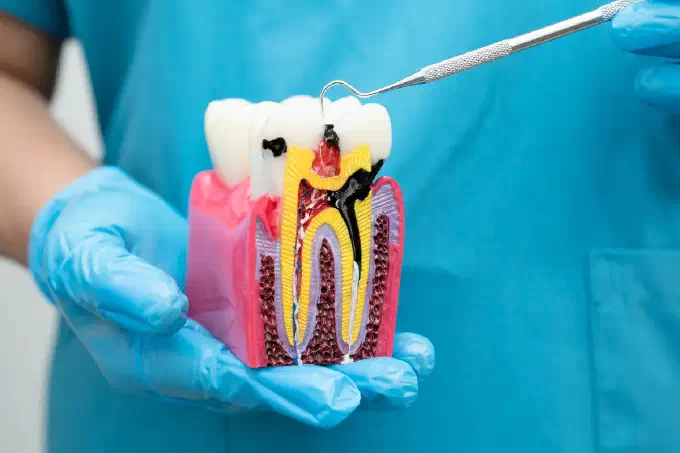
Tooth decay (dental caries) is the breakdown of the hard tissues of a tooth. Bacteria that live in the sticky film on your teeth—plaque—feed on the sugars and starches you eat and produce acid. Each time you eat or drink something sugary, that acid attacks your enamel for around 20 minutes, pulling minerals out of it. Saliva and fluoride work to put minerals back, but when acid attacks outpace repair, the enamel softens and eventually a hole forms. That hole is a cavity.
Unlike a bone, a tooth cannot heal a hole on its own. (Curious why? See Why Teeth Aren’t Bones.)
Why Does Tooth Decay Happen?
- Sugars and frequent snacking. Every sugary snack or sip restarts the acid attack, so grazing all day is harder on teeth than one dessert with a meal.
- Plaque and biofilm. Your mouth hosts a mix of helpful and harmful bacteria. When plaque is not brushed and flossed away, the harmful species take over and plaque hardens into tartar, which shelters even more bacteria.
- Dry mouth. Saliva neutralizes acid and washes away food. Medications, mouth breathing, dehydration and age can all reduce saliva flow and raise cavity risk.
- Skipping the basics. Brushing less than twice a day, not flossing, and missing checkups let small problems grow unchecked.
- Deep grooves and exposed roots. Molars with deep pits trap food, and gum recession exposes softer root surfaces that decay faster than enamel.
Research now shows decay is not caused by a single “bad bug” but by an imbalance in the whole community of bacteria in plaque—which is why daily plaque removal matters more than any single product.
The Five Stages of Tooth Decay
Decay does not happen overnight. It creeps through predictable stages:
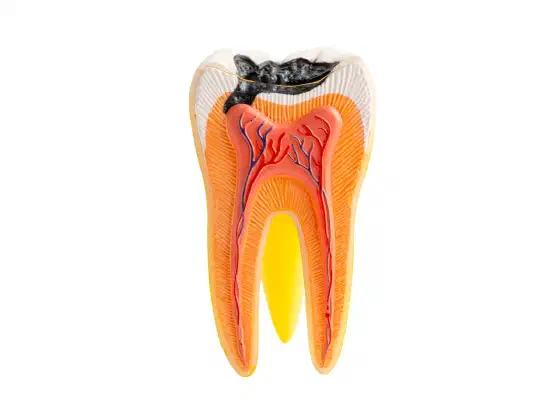
- White spots (demineralization). Acid pulls minerals from the enamel, leaving chalky white or dull patches. At this stage decay is reversible.
- Enamel breakdown. The weakened enamel breaks and a small cavity forms. It needs a filling, but the repair is small.
- Dentin decay. Decay reaches the softer dentin under the enamel and moves faster. Sensitivity to hot, cold and sweets is common.
- Pulp involvement. Bacteria reach the nerve and blood vessels in the center of the tooth. Pain becomes constant or throbbing, and a root canal is usually needed to save the tooth.
- Abscess. Infection spreads past the root tip into the bone and gums, causing swelling, severe pain and sometimes fever. This is a dental emergency.
The earlier we catch decay, the smaller and less expensive the fix.
Symptoms of a Cavity
Early cavities often have no symptoms at all, which is why many are found only on X-rays. As decay progresses, watch for:
- Sensitivity to hot, cold or sweet foods and drinks
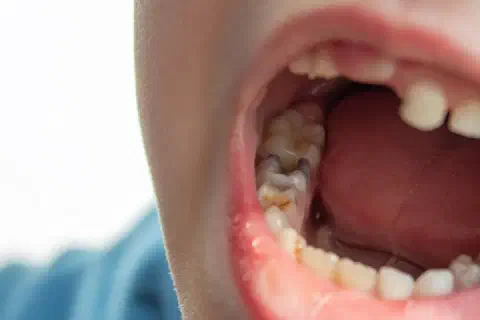
- Spots on a tooth—white, brown or black
- A toothache that comes and goes, or pain when you bite down
- Bad breath or a bad taste that brushing does not fix
- A visible hole or pit, or floss that shreds in the same spot every time
Where cavities like to hide
- Between teeth. Cavities on the side of a tooth are hard to see and are usually spotted on bite-wing X-rays. Daily flossing is the best defense.
- On front teeth. Decay near the gumline or between front teeth can show as a dark spot. Tooth-colored composite fillings restore both the tooth and your smile.
- In the grooves of molars. The deep pits on chewing surfaces trap food. Sealants protect these areas, especially in children.
- Around old fillings and under crowns. Worn margins let bacteria in, so we check existing dental work at every exam.
Can a Cavity Heal on Its Own?
Only in the very first stage. White-spot lesions can remineralize with fluoride toothpaste, professional fluoride treatment, better brushing and flossing, and fewer sugary snacks. Once the enamel surface has broken and a hole has formed, no rinse, paste or home remedy can rebuild it—the decay keeps advancing until it is removed and the tooth is restored. Regular exams give us the chance to catch decay while it is still reversible.
How Tooth Decay Is Treated
Treatment matches the stage of decay:
| Stage | Typical treatment | Typical cost |
|---|---|---|
| White spots | Fluoride treatment, improved home care, sealants | Often covered as preventive care |
| Small to medium cavity | Tooth-colored composite filling | $150–$350 per tooth |
| Large cavity or cracked tooth | Porcelain inlay/onlay or crown | $600–$1,200 (inlay/onlay), $800–$2,000 (crown) |
| Decay in the nerve | Root canal, usually followed by a crown | $800–$1,500 (root canal) |
| Tooth cannot be saved | Extraction and replacement | $150–$600 (extraction) |
These are typical ranges; your written estimate depends on the exam, X-rays and your insurance. Most plans cover a large share of fillings and a smaller share of crowns and root canals. We verify your benefits and explain your costs before treatment.
A filling appointment usually takes 30–60 minutes per tooth: we numb the area with local anesthetic, remove the decay, place the filling in layers, then polish it and check your bite. You can eat once the numbness wears off. Learn more about materials and what to expect on our fillings and restorations page.
What Happens If You Wait?
An untreated cavity only moves in one direction: small cavity → large cavity → infected nerve → abscess → tooth loss. Each step costs more and preserves less of your natural tooth. A filling now can prevent a root canal and crown later, and a saved tooth prevents the bone loss and shifting that follow an extraction. If decay has already progressed to severe damage, our guide to rotten teeth explains how even badly decayed teeth can often be restored.
Who Is at Higher Risk?
- People with dry mouth from medications or medical conditions
- Frequent snackers and anyone who sips sugary or acidic drinks through the day
- Children with newly erupted molars and adults with gum recession
- Patients with braces, many restorations or a history of cavities
- Smokers and tobacco users
At your exam we assess these risk factors—a caries risk assessment—and tailor prevention to you, whether that means more frequent fluoride, sealants, a prescription toothpaste or a dry-mouth plan.
Preventing Tooth Decay at Home
- Brush twice a day for two minutes with fluoride toothpaste
- Floss or use a water flosser every day
- Limit sugary and acidic foods and drinks, and keep them to mealtimes
- Drink fluoridated tap water throughout the day
- Chew sugar-free xylitol gum after meals when you cannot brush
- Ask about professional fluoride treatment and sealants if you are at higher risk
- See us every six months for an exam and cleaning
For a complete plan, read our guide on how to prevent tooth decay and cavities.
When to Call Us
Schedule an exam if you notice sensitivity, a spot on a tooth, or pain when you bite. Call us during office hours (Mon–Fri, 9 AM–5 PM) at (909) 987-6268 and we will fit urgent cases in the same day whenever possible. For severe swelling, uncontrolled bleeding or facial trauma after hours, go to the nearest emergency room.
Alta Loma Dental Care is located at 7283 Carnelian St, Rancho Cucamonga, CA 91701.
Note: This article is for informational purposes only and does not substitute professional dental advice.
Prices mentioned on this page are typical ranges for planning purposes only. Your written estimate depends on the exam, X-rays and your insurance benefits, and we confirm costs with you before any treatment begins.