A dull, throbbing ache at the very back of your mouth is often the first sign that a wisdom tooth is on the move.
Wisdom teeth, the third molars, usually try to erupt between ages 17 and 25, and many jaws do not have room for them. At Alta Loma Dental Care in Rancho Cucamonga we see wisdom tooth pain in high school seniors, college students and adults well past their twenties. This guide explains why the pain happens, what you can safely do at home, and when it is time to call.
Key takeaways
- Wisdom tooth pain usually comes from impaction, crowding, infection under the gum or decay in a tooth that is hard to clean.
- Salt-water rinses, over-the-counter pain relievers and ice give temporary relief but do not fix the cause.
- Swelling, fever, trouble opening your mouth or pain lasting more than a day or two mean you should be seen promptly.
- If removal is recommended, our wisdom teeth removal page explains the procedure, costs and recovery.
Why wisdom teeth hurt
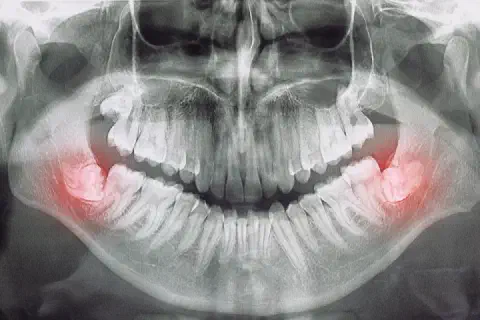
Wisdom teeth are the last teeth to arrive, and by the time they erupt the rest of the teeth have already settled into place. When there is not enough room, a wisdom tooth may come in at an angle, only partway, or stay trapped in the bone. Each of these situations can cause pain in a different way:
- Impaction. A tooth stuck against bone or the neighboring molar creates pressure that can be felt in the jaw, ear or temple.
- Pericoronitis. A partially erupted tooth leaves a flap of gum that traps food and bacteria. The gum becomes swollen and tender, and you may notice a bad taste or difficulty opening wide.
- Decay. Wisdom teeth are hard to brush and floss, so cavities develop easily in the tooth itself and in the molar in front of it.
- Crowding. An erupting wisdom tooth can push against the teeth ahead of it, causing pressure and, over time, shifting.
- Cysts. Rarely, a fluid-filled sac forms around an impacted tooth and damages the surrounding bone.
Dr. Lee starts with a thorough examination and digital X-rays to see exactly how each wisdom tooth is positioned. Mild irritation from a tooth that is erupting normally may only need monitoring and good hygiene; impaction, infection or decay usually calls for removal.
What you can do at home
While you wait for your appointment, these steps can take the edge off:
- Rinse with warm salt water (half a teaspoon of salt in 8 oz of warm water) two or three times a day, especially after meals.
- Take ibuprofen or acetaminophen as directed on the label, unless your physician has told you to avoid them.
- Hold an ice pack wrapped in a cloth against your cheek for 15 minutes at a time.
- Brush gently around the tooth to keep food out of the gum flap, and avoid hard or chewy foods on that side.
These measures relieve symptoms; they do not treat the underlying problem. If the pain keeps returning, the tooth needs to be evaluated.
When to call the office
Call us promptly if you have:
- Severe pain that over-the-counter medication does not control
- Swelling of your face or jaw, or a fever
- Difficulty opening your mouth or swallowing
- Pus, a persistent bad taste or odor
- Pain that lasts more than a day or two, or keeps coming back
Call us during office hours (Mon–Fri, 9 AM–5 PM) and we will fit urgent cases in the same day whenever possible. For severe swelling, uncontrolled bleeding or facial trauma after hours, go to the nearest emergency room. Our emergency dentistry page explains what to do in the meantime.
If removal is recommended
Not every wisdom tooth needs to come out. A tooth that erupts upright, has room and can be cleaned properly can stay, and we will tell you so. When a wisdom tooth is impacted, infected or damaging its neighbor, removal is usually the best long-term fix, and it is easier in the late teens and early twenties before the roots fully form. Our wisdom teeth removal in Rancho Cucamonga page covers anesthesia options, how long the procedure takes and typical costs, and our recovery guide walks you through healing day by day.
Schedule an evaluation
Wisdom tooth pain rarely goes away for good on its own. Call Alta Loma Dental Care at (909) 987-6268 or request an appointment online. We are located at 7283 Carnelian St, Rancho Cucamonga, CA 91701, and we accept most dental insurance plans.
Prices mentioned on this page are typical ranges for planning purposes only. Your written estimate depends on the exam, X-rays and your insurance benefits, and we confirm costs with you before any treatment begins.