This guide gives you the best electric toothbrush and toothpaste recommendations, straight from our Rancho Cucamonga dental team.
We base every pick on current evidence, ADA guidelines, and what actually improves plaque removal, gum health, and comfort for local families.
You’ll discover proven, affordable options—like the Oral-B Pro 1000 for powerful everyday cleaning and the Philips Sonicare 4100 for gentle sensitivity relief—plus the exact toothpastes that pair perfectly for cavity protection, pain relief, or safe whitening.
We’ll keep it simple: clear comparisons, must-have features, and easy techniques so you get real results without guesswork.
Best of all, a quick visit with us can customize these choices to your unique smile and catch small issues early.
Ready to make brushing feel easier and more effective starting today? Let’s jump into the top picks.
Why Switch to an Electric Toothbrush? The Benefits Explained
Patients at Alta Loma Dental Care in Rancho Cucamonga often feel confused in the toothbrush aisle. They look at many choices and ask, “What is the best electric toothbrush and toothpaste?” This is one of the questions the team hears most often.
There is no one choice that is best for everyone. The right toothbrush and toothpaste depend on each person’s needs. Common needs include:
- Sensitive teeth (this happens often in the area because of hard water)
- Gentle care for sore or receding gums
- Safe whitening that does not cause pain
- Easier brushing for people with arthritis or very busy days
Switching to an electric toothbrush often removes more plaque, keeps gums healthier, and makes smiles brighter.
Key Features to Look for in an Electric Toothbrush
Patients at Alta Loma Dental Care in Rancho Cucamonga often feel confused by all the electric toothbrush options. The team helps people choose the right one every day. Here are the simple, proven features that make the biggest difference for a healthy smile.
Must-Have Features
The team at Alta Loma Dental Care follows ADA guidelines and widely published clinical guidance. Here is what we recommend looking for:
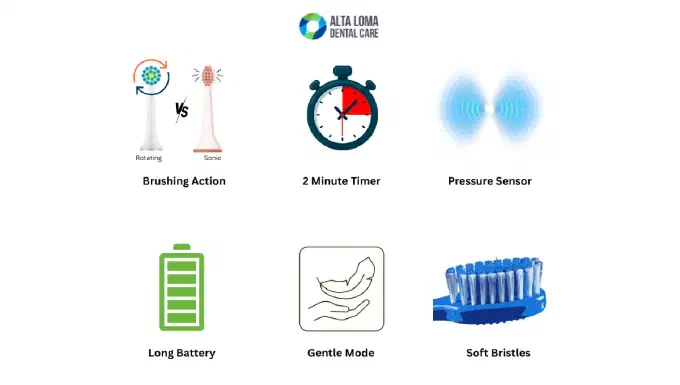
- Brushing action: Pick oscillating-rotating (like Oral-B) or sonic (like Philips Sonicare). Both clean well. Oscillating often helps reduce gum swelling more.
- 2-minute timer: It beeps every 30 seconds to change areas. This is the ADA’s top tip for complete cleaning.
- Pressure sensor: It warns if brushing is too hard. This protects gums and enamel.
- Gentle modes: Choices like sensitive or whitening match different needs.
- Long battery life: Choose rechargeable models that last 2 weeks or more.
- ADA Seal: Look for this on the package or at ADA.org. It means the brush is safe and works well.
- Soft bristles: These are gentle on teeth, especially for sensitive mouths.
Skip extra apps unless they will be used often. Replacement heads cost $10–20 each.
Essential Features at a Glance
| Feature | Why It Helps | Examples |
|---|---|---|
| Pressure Sensor | Stops gum damage | Oral-B iO, Philips Sonicare |
| Timer | Full 2-minute clean | Most good models |
| ADA Seal | Safe and effective | Oral-B Pro 1000, Sonicare 4100 |
Top Electric Toothbrush Recommendations
No one brush is “the best” universally, but based on independent product testing and ADA acceptance, these stand out for reliability, cleaning power, and value. All have ADA acceptance where applicable.
Best Overall/Affordable
Oral-B Pro 1000: This remains a top pick across reviews for good reason. It oscillates and pulsates effectively, has a timer, pressure sensor, and long battery life. Priced around $50–70, it’s a steal for the performance. Great for beginners or budget-conscious families in Rancho Cucamonga.
Best Sonic Technology
Philips Sonicare 4100 Series: This is the updated product of Philips Sonicare ProtectiveClean 4100.
- Sonicare technology
- QuadPacer and SmarTimer
- Slim ergonomic design
- 14-day battery life
Premium Pick
Oral-B iO Series (like iO Series 2 or higher): For app tracking, AI positioning, and superior cleaning—many experts call it best overall. $150+, but worth it for tech-savvy users wanting whitening modes.
Honorable Mention Budget
Bitvae or AquaSonic Models: Under $40, ADA-accepted options with strong reviews for everyday use and whitening features.
At Alta Loma Dental Care, we see consistently good results with Oral-B and Sonicare models in our patients, with noticeably less plaque buildup at their next cleaning.
Compare Our Top Electric Toothbrush Picks
| Model | Best For | Approx. Price | Key Pros | Cons |
|---|---|---|---|---|
| Oral-B Pro 1000 | Overall value | $50–70 | Pressure sensor, effective cleaning | Basic modes |
| Philips Sonicare 4100 | Sensitive gums | $50–80 | Gentle sonic action | Slightly louder |
| Oral-B iO Series | Premium features | $150+ | App, multiple modes | Higher cost |
Types of Electric Toothbrushes
Electric toothbrushes clean in one of three ways:
- Oscillating-rotating (Oral-B): a small round head spins back and forth, which is excellent for precise cleaning in tight spots and has strong evidence for reducing gum inflammation.
- Sonic (Philips Sonicare): high-frequency side-to-side vibrations sweep plaque away and push fluid between teeth; many people with sensitive gums find them gentler.
- Ultrasonic: less common and usually more expensive; these use very high-frequency waves to disrupt bacteria.
Oscillating-rotating suits people who want a thorough, targeted clean; sonic suits sensitive mouths and stain-prone teeth. Both outperform a manual brush when used properly.
Who Benefits Most from an Electric Toothbrush?
- Children: the built-in timer and the novelty encourage longer, more consistent brushing.
- Seniors and anyone with arthritis or limited dexterity: the brush does the work, so a light grip is enough.
- People with braces, implants, bridges or crowns: small heads and steady motion clean around brackets and margins more reliably.
- Anyone who brushes too hard or too briefly: pressure sensors and quadrant timers correct both habits automatically.
Caring for Your Electric Toothbrush
- Rinse the head after every use and let it air-dry upright; avoid closed travel caps at home, which trap moisture.
- Wipe the handle with a damp cloth weekly to remove toothpaste buildup.
- Replace brush heads every three months, or sooner if the bristles splay—and after any illness.
- Charge sensibly: most rechargeable models last two weeks or more per charge, so there is no need to leave them on the charger constantly.
Common mistakes to avoid
- Pressing too hard: let the brush do the work and heed the pressure sensor.
- Stopping early: two full minutes, twice a day, is the standard.
- Skipping the tongue: bacteria there cause bad breath; brush it or use a scraper.
- Using the wrong head: choose sensitive heads for tender gums and orthodontic heads for braces.
An electric toothbrush handles the tooth surfaces; for the spaces between teeth, pair it with floss or a water flosser, and see our daily oral hygiene routine for the full step-by-step.
How to Choose the Best Toothpaste for Your Smile
Pairing your brush with the right toothpaste amplifies results. The ADA stresses fluoride as the #1 ingredient for cavity prevention—avoid fluoride-free unless specifically advised by your dentist.
Key factors to consider:
- Fluoride content: 1,000–1,500 ppm for adults.
- ADA Seal: Confirms the paste has been tested for safety and effectiveness, including abrasiveness.
- Specific needs: Sensitivity (potassium nitrate), tartar control (pyrophosphates), whitening (mild peroxides or abrasives).
- Avoid harsh whitening if sensitive: over-abrasive pastes can wear enamel.
Don’t fall for trendy “natural” claims without fluoride—science shows it’s essential for protecting your smile.
Dentist-Recommended Toothpastes
Based on dentist surveys and independent product reviews:
Best Daily Protection: Crest Pro-Health or Colgate Total
All-around fighters against cavities, plaque, and gingivitis. Stannous fluoride for gum health, around $6–10.
Best for Sensitive Teeth: Sensodyne (Pronamel or Rapid Relief)
Potassium nitrate desensitizes nerves quickly. A top choice for many of our patients experiencing hot/cold sensitivity.
Best for Whitening: Crest 3D White or Colgate Optic White Pro
Gentle peroxide formulas, dentist-approved for safe brightening without excess abrasion.
Compare Our Top Toothpaste Picks
| Type | Top Pick | Key Ingredient | Best For | Price |
|---|---|---|---|---|
| Daily | Crest Pro-Health | Stannous fluoride | Gum health | $6–10 |
| Sensitivity | Sensodyne | Potassium nitrate | Pain relief | $7–12 |
| Whitening | Colgate Optic White | Hydrogen peroxide | Stain removal | $8–12 |
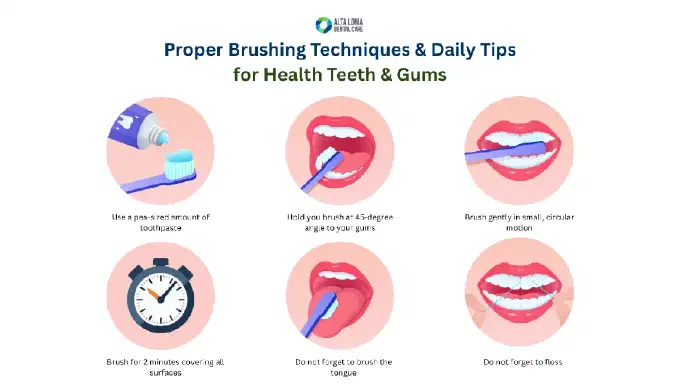
Proper Brushing Techniques and Daily Tips
Even the best tools need proper use. Follow ADA guidelines for optimal results:
- Use a pea-sized amount of toothpaste.
- Hold the brush at a 45-degree angle to your gums.
- Brush gently—let the electric brush do the work.
- Spend 2 minutes total, twice daily.
- Don’t forget to clean your tongue, floss daily, and consider an antimicrobial mouthwash.
Common mistakes include brushing too hard or too briefly. We review technique at every exam and cleaning at Alta Loma Dental Care because small adjustments make a big difference.
Conclusion
Choosing the right electric toothbrush and toothpaste truly empowers you to take control of your oral health. The benefits—healthier gums, fewer cavities, and a brighter smile—are worth the small effort to find what fits your life.
We’ve covered the evidence-based benefits, must-have features, current top picks, toothpaste guidance, and proper techniques. Remember, the “best” tools are the ones you’ll use consistently, paired with professional care.
At Alta Loma Dental Care, we’ve seen countless Rancho Cucamonga patients transform their smiles with these simple upgrades. Your oral health matters—let’s make your routine the best it can be.
Note: This article is for informational purposes only and does not substitute professional dental advice.
Prices mentioned on this page are typical ranges for planning purposes only. Your written estimate depends on the exam, X-rays and your insurance benefits, and we confirm costs with you before any treatment begins.