
What should you eat after tooth extraction, fillings, or other dental procedures?
The foods you choose in the first 24-72 hours after dental work directly impact your comfort, healing speed, and risk of complications like dry socket or infection. At Alta Loma Dental Care in Rancho Cucamonga, we guide patients through smooth recoveries every day.
The key is simple: soft, nutrient-rich foods support healing, while hard, sticky, hot, or acidic items can disrupt blood clots, damage new dental work, and cause unnecessary pain. This comprehensive guide covers exactly what to eat—and what to avoid—after common dental procedures including:
- Tooth extractions and wisdom teeth removal
- Dental fillings
- Root canal treatment
- Crown placement
- Deep cleanings
Whether you’re recovering from a simple filling or a surgical extraction, following these evidence-based dietary guidelines will help you heal faster and return to your normal diet sooner. Need immediate advice? Call Alta Loma Dental Care at (909) 987-6268. We’re here to support your recovery.
Understanding Common Dental Procedures and Recovery Basics
Dental procedures are designed to restore and protect your oral health. At Alta Loma Dental Care, we perform these treatments daily for patients throughout Rancho Cucamonga, Alta Loma, Etiwanda, and surrounding communities. Understanding what each procedure involves helps you prepare for recovery.
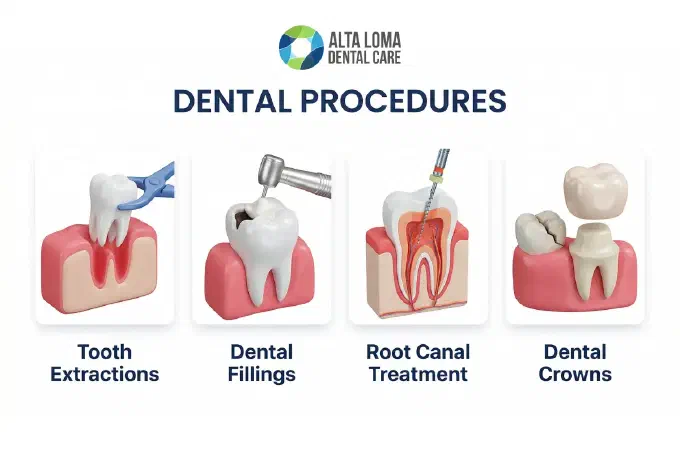
Common Dental Procedures Explained
Tooth Extractions
We remove teeth when they’re severely decayed, damaged beyond repair, or causing crowding. Recovery typically takes 7-10 days, though the socket continues healing for several weeks.Dental Fillings
Fillings restore teeth damaged by cavities. We remove decayed material and fill the space with composite resin (tooth-colored) or amalgam (silver). Most patients experience minimal discomfort and can eat normally within a few hours.Root Canal Treatment
When tooth pulp becomes infected, root canal therapy removes the infection and saves the tooth. The procedure requires 1-2 appointments, with full healing taking about a week after the permanent crown is placed.Dental Crowns
Crowns cap and strengthen damaged teeth. You’ll wear a temporary crown for 2-3 weeks while your permanent restoration is crafted. Temporary crowns require extra care with diet.
Why Diet Matters After Dental Work
Your diet plays a critical role in healing after dental procedures. While it might seem inconvenient to modify what you eat for a few days, this temporary adjustment prevents serious complications and accelerates recovery.
How Food Choices Impact Healing
When your mouth is healing, the foods you choose either support or hinder the natural repair process:
Physical Protection:
Soft foods protect sensitive surgical sites, new dental work, and healing tissue from damage. Hard or crunchy foods can:
- Dislodge blood clots (leading to painful dry socket)
- Crack or loosen new fillings and crowns
- Irritate or tear healing tissue
- Introduce bacteria into open wounds
Nutritional Support:
Your body needs specific nutrients to heal efficiently:
- Protein rebuilds damaged tissue
- Vitamin C supports collagen formation and wound healing
- Vitamin A promotes tissue regeneration
- Zinc fights infection and speeds recovery
- Calcium maintains bone strength around extraction sites
Temperature Considerations:
Extreme temperatures affect healing:
- Hot foods and beverages can dissolve protective blood clots
- Very cold items may cause pain with exposed nerves
- Room temperature or lukewarm options are ideal for the first 48 hours
The Cost of Poor Dietary Choices
Not following post-procedure dietary guidelines can result in:
Dry Socket (Alveolar Osteitis): This painful condition occurs when the blood clot protecting an extraction site dislodges. It affects 2-5% of routine extractions but up to 30% when dietary and post-operative instructions aren’t followed. Symptoms include severe pain, visible bone, and foul breath.
Damaged Dental Work: Biting into hard foods can crack porcelain crowns, loosen fillings, or break temporary restorations—requiring additional appointments and expenses to repair.
Infection: Food particles trapped in healing sites introduce bacteria, potentially causing infections that require antibiotics or additional treatment.
Delayed Healing: Poor nutrition and tissue trauma from inappropriate foods extend recovery time, meaning more days of discomfort and dietary restrictions.
The Alta Loma Dental Care Approach
We provide every patient with personalized dietary guidance because we know that clear, specific instructions lead to better outcomes. Our patients consistently report comfortable recoveries and return to normal eating faster than expected.
The bottom line: A few days of careful eating prevents weeks of complications. The temporary inconvenience is worth the long-term benefit of a smooth, comfortable recovery.
Foods to Avoid After Tooth Extractions
Tooth extractions require the most careful dietary attention of all dental procedures. The extraction site must form and maintain a protective blood clot for proper healing. Certain foods and eating habits can disrupt this process, leading to painful complications such as dry socket. If your extraction was a third molar, our wisdom teeth removal recovery guide covers the full day-by-day healing process.
Critical First 24 Hours: Protect the Blood Clot
The first day after extraction is when dry socket risk is highest. Follow these strict guidelines:
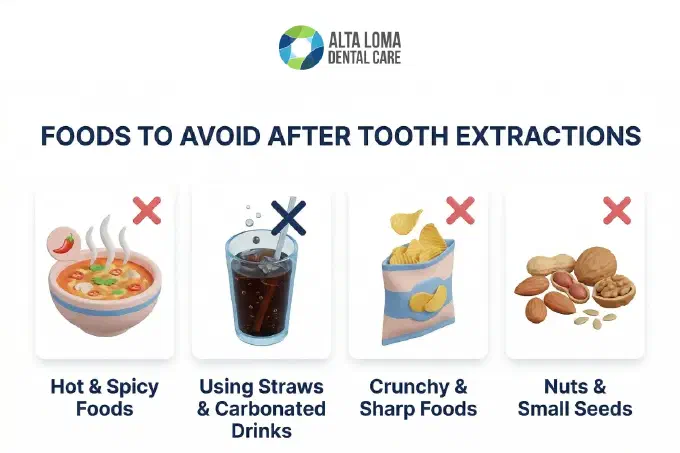
Avoid All Hot Foods and Beverages
Heat dissolves blood clots and increases bleeding. Skip:
- Hot coffee, tea, or cocoa
- Soup served hot (let cool to lukewarm)
- Freshly cooked meals (allow to cool for 15-20 minutes)
Never Use Straws
The suction created when drinking through a straw can dislodge the blood clot. According to the American Dental Association, this is one of the most common causes of dry socket. Drink directly from a cup or use a spoon for thicker beverages.
Skip Alcohol and Carbonated Drinks
Alcohol interferes with healing and interacts negatively with pain medications. Carbonation can irritate the extraction site and create pressure that disturbs the clot.
Days 2-7: Continue Protection While Healing
Hard and Crunchy Foods to Avoid:
- Nuts and seeds (can lodge in socket)
- Chips, crackers, and pretzels
- Raw vegetables (carrots, celery, broccoli)
- Popcorn (kernels are notorious for getting stuck)
- Hard candy or ice
- Toast with hard crusts
- Granola and whole grain cereals
Sticky and Chewy Foods:
- Caramel and taffy
- Chewing gum
- Gummy candies
- Dried fruits
- Peanut butter (can stick to extraction site)
- Bagels and chewy breads
Spicy and Acidic Foods:
- Hot sauce, salsa, and spicy seasonings (irritate tissue)
- Citrus fruits and juices (orange, grapefruit, lemon)
- Tomatoes and tomato sauce
- Vinegar-based dressings
- Pickles
- Pineapple (contains enzymes that may irritate)
Foods Requiring Excessive Chewing:
- Tough meats (steak, jerky)
- Chewy breads
- Raw apples
- Corn on the cob
What You CAN Eat After Extraction
Focus on nutrient-dense, soft foods:
- Yogurt and smoothies (no straw!)
- Mashed potatoes with gravy
- Scrambled eggs
- Lukewarm soup (broth-based or pureed)
- Applesauce
- Cottage cheese
- Oatmeal (cooled)
- Protein shakes
- Soft pasta with butter or mild sauce
- Pudding and gelatin
- Ripe bananas
Pro tip: Eat on the opposite side of your mouth from the extraction site when possible.
FREE Checklist Foods to avoid after a Dental Procedure.
When to Contact Alta Loma Dental Care
Call our office immediately at (909) 987-6268 if you experience:
Emergency Signs:
- Severe pain that worsens after 3-4 days or isn’t relieved by medication
- Excessive bleeding that doesn’t stop with gentle pressure after 30 minutes
- Fever over 101°F
- Swelling that increases after 72 hours or extends to your eye or neck
- Difficulty breathing or swallowing
- Numbness that doesn’t resolve within expected timeframe
Concerning Symptoms:
- Visible bone in extraction socket (dry socket)
- Foul odor or taste from the surgical site
- Pus or discharge
- Stitches that come loose (some dissolve, others need removal)
- Sensitivity that worsens instead of improving
- Reaction to prescribed medications
Questions About Recovery:
- Unsure if a symptom is normal
- Need clarification on dietary guidelines
- Want to confirm when you can resume specific activities
- Need to schedule a follow-up appointment
Our team at Alta Loma Dental Care is here to support you through every step of recovery. We’d rather answer your questions and provide reassurance than have you suffer unnecessarily or develop complications.
Office Location: 7283 Carnelian St, Rancho Cucamonga, CA 91701
Phone: (909) 987-6268
Serving: Rancho Cucamonga, Alta Loma, Etiwanda, Fontana, Upland, and surrounding areas
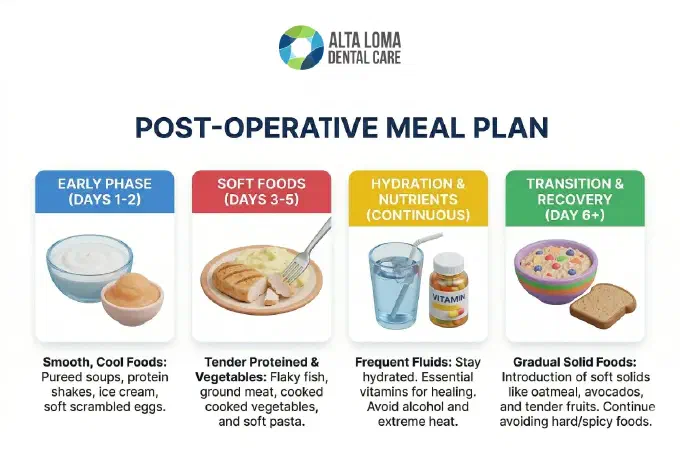
7-Day Post-Extraction Meal Plan
Day 1: Immediate Post-Procedure
Breakfast: Greek yogurt with honey (room temperature)
Lunch: Lukewarm cream of chicken soup, applesauce
Dinner: Mashed potatoes with gravy, scrambled eggs
Snacks: Protein shake (no straw), pudding
Day 2-3: Initial Healing
Breakfast: Oatmeal (cooled) with mashed banana
Lunch: Cottage cheese, soft avocado slices, lukewarm broth
Dinner: Soft pasta with butter, steamed carrots (mashed)
Snacks: Smoothie bowl (eat with spoon), gelatin
Day 4-5: Progression
Breakfast: Pancakes (small bites), soft scrambled eggs
Lunch: Tuna salad (well-mashed), soft bread, cooked sweet potato
Dinner: Baked fish (flaky texture), mashed cauliflower
Snacks: Ripe pear slices, cheese (soft varieties)
Day 6-7: Near Normal
Breakfast: French toast (soft), banana
Lunch: Soft sandwich with tender chicken, cooked vegetables
Dinner: Ground beef with soft rice, steamed vegetables
Snacks: Fresh melon, soft cookies
Download FREE of 7-Day Post-Extraction Meal Plan Checklist
Conclusion
Skip bad foods after common dental procedures for fast, easy healing. Dodge crunchy snacks after pulls or hot items after fillings. This keeps your work safe and lets you enjoy Rancho Cucamonga life soon.
It may feel hard, but our tips from the ADA and Alta Loma Dental Care help. You will smile bright again fast.
Key points:
- Protect your mouth with soft foods.
- Heal quicker with good choices.
- We know it is tough – we help many in town.
For dental help or questions, call us now at (909) 987-6268 or visit Alta Loma Dental Care. See Dr. Sid Lee at 7283 Carnelian St. We care for you and your family.