


You’re growing a tiny human, and suddenly even brushing your teeth feels risky. Is it really safe to see the dentist while pregnant?
Yes-dental care during pregnancy is not only safe but strongly recommended for most women in Rancho Cucamonga. At Alta Loma Dental Care, our team has helped hundreds maintain healthy smiles without worry.
Hormonal changes can make gums more sensitive and increase risks like gingivitis, which affects up to 75% of pregnant women according to the Mayo Clinic. Skipping care doesn’t protect your baby-it can actually raise risks of preterm birth or low birth weight. The good news? Routine cleanings, fillings, and most treatments are perfectly safe when timed right, especially in your second trimester. We follow ADA and ACOG guidelines to the letter, using the gentlest techniques, minimal anesthesia when needed, and extra comfort measures like pregnancy pillows. You’ll leave feeling relieved, not stressed.
Ready to feel confident about your smile again? Keep reading-we’ll cover the safest timing, what procedures are okay, at-home tips, and exactly how we make visits comfortable for you and your baby. Your healthy smile matters now more than ever.
Checklist for Dental Procedure during pregnancy
Why Oral Health Matters During Pregnancy
Pregnancy changes your body in amazing ways, but those same hormonal shifts can make your gums more sensitive and prone to inflammation. What many people call “pregnancy gingivitis” actually affects 60% to 75% of expecting mothers, according to the Mayo Clinic. Bleeding gums, redness, or small growths called pregnancy tumors (which are almost always benign) can appear seemingly overnight.
Beyond discomfort, untreated gum disease has been linked to preterm birth and low birth weight in some studies. The American Dental Association points out that severe periodontal disease may increase those risks, which is why preventive care is so important.
At Alta Loma Dental Care, we’ve seen firsthand how consistent cleanings and early intervention help moms avoid complications and feel their best. One patient from the Alta Loma neighborhood came in worried about bleeding gums at 20 weeks; after a gentle cleaning and some home-care adjustments, her gums settled down beautifully, and she delivered a healthy full-term baby.
Taking care of your smile isn’t just about you-it’s one more way you’re nurturing your baby, too.
Common Dental Issues Expecting Mothers Face
The most frequent concerns we hear from our pregnant patients are:
- Pregnancy gingivitis (swollen, tender, bleeding gums)
- Increased cavities due to cravings, morning sickness acid exposure, and sometimes less frequent brushing when nausea hits
- Enamel erosion from frequent vomiting
- Dry mouth from hormonal changes or medications
According to the Cleveland Clinic, repeated acid exposure from morning sickness can soften enamel quickly, making teeth more vulnerable. That’s why we encourage rinsing with a baking-soda-and-water mix (not brushing right away) to neutralize acid safely.
We’ve had many local patients tell us they felt embarrassed about skipping brushing during rough first-trimester mornings. Please know there’s zero judgment here-we’re just glad when you come in so we can help get things back on track gently and effectively.
Which Trimesters Are Best for Dental Treatment?
First Trimester
The first 12 weeks are when your baby’s major organs are forming. The ADA and American College of Obstetricians and Gynecologists recommend postponing elective treatment and focusing only on emergencies (severe pain, infection, or swelling) during this time.
Second Trimester - The Safest Window
Weeks 14 to 28 are considered the ideal time for routine cleanings, fillings, and even crowns if needed. You’re usually past morning sickness, your energy is higher, and risks to the baby are lowest. This is when Dr. Sid Lee most often schedules comprehensive care for our pregnant patients from Rancho Cucamonga and surrounding neighborhoods.
Third Trimester
Treatment is still safe, but we keep appointments shorter because lying back for long periods can be uncomfortable and may reduce blood flow. Emergency care is always available and important-untreated infection poses a bigger risk than treatment.
Are Dental X-Rays Safe During Pregnancy?
Yes-when necessary and with proper shielding. Modern digital X-rays use extremely low radiation (less than everyday background exposure). We always use a lead apron with thyroid collar, as recommended by both the American Dental Association and the FDA. We only take images when they’re essential for diagnosis, and many routine checkups don’t require any at all.
Local Anesthesia and Pain Management
Lidocaine, the most common dental anesthetic, is Category B (considered safe) and has been used safely in millions of pregnant patients. Dr. Sid Lee uses the smallest effective dose and avoids high concentrations of epinephrine when possible. According to the Cleveland Clinic and ADA guidelines, local anesthesia does not increase risks to the baby when administered properly.
Medications We Can and Cannot Use
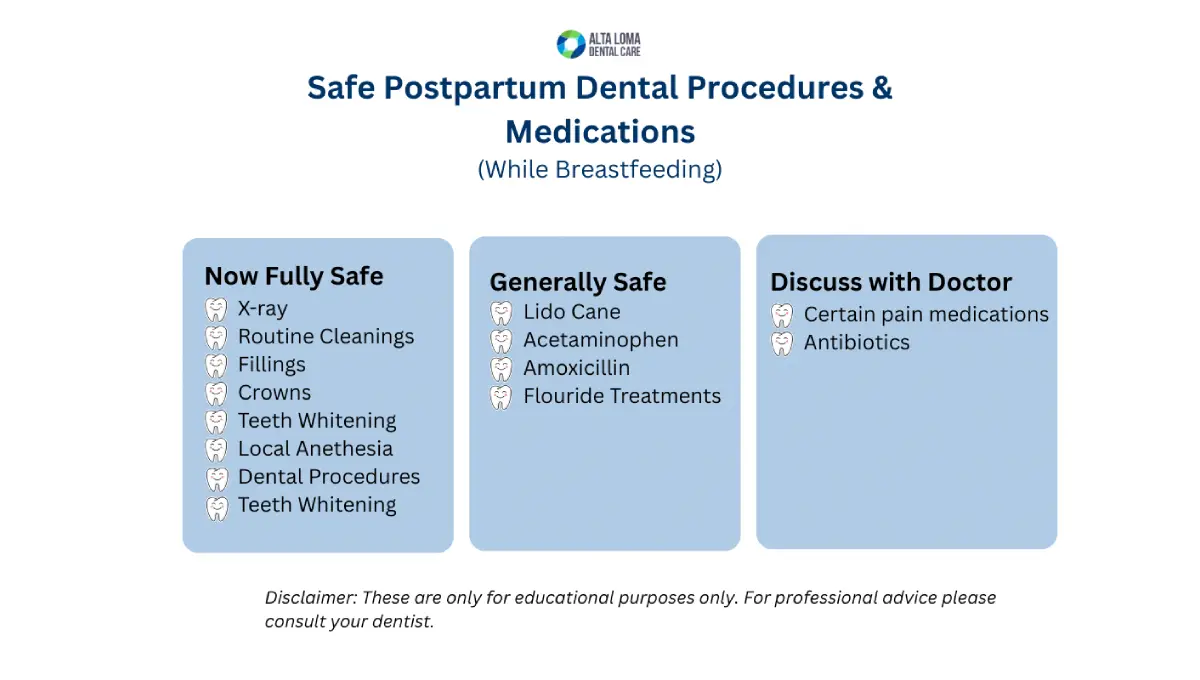
Here’s a simple reference table we share with patients:
| Medication Type | Generally Safe During Pregnancy | Use Caution or Avoid |
|---|---|---|
| Antibiotics | Penicillin, amoxicillin, cephalosporins | Tetracycline (can affect baby’s tooth development) |
| Pain Relievers | Acetaminophen (Tylenol) | High-dose ibuprofen/NSAIDs in third trimester |
| Local Anesthetics | Lidocaine (with low epinephrine) | None routinely avoided |
Always check with your OB-GYN and let us know what they recommend-we’re happy to coordinate care.
Emergency Dental Care While Pregnant
An untreated abscess or severe toothache can lead to systemic infection, which is far riskier than treatment. If you experience swelling, severe pain, or trauma, please call us right away at (909) 987-6268-we reserve same-day emergency slots for pregnant patients throughout Rancho Cucamonga.
How We Make Dental Visits Comfortable for Pregnant Patients at Alta Loma Dental Care
We know comfort matters more than ever right now. That’s why we offer:
- Pregnancy support pillows to keep you slightly on your left side
- Shorter or split appointments if needed
- Breaks whenever you want them
- Calm, quiet treatment rooms and noise-canceling headphones if desired
One of our Etiwanda patients recently completed a root canal comfortably in her second trimester using these accommodations-she told us afterward she actually dozed off during the procedure!
At-Home Oral Care Tips for Expecting Mothers
- Brush gently twice daily with a soft toothbrush and fluoride toothpaste
- Floss daily-consider a water flosser if gums are very tender
- Rinse with fluoride mouthwash (alcohol-free) if recommended
- After morning sickness, rinse with baking soda water (1 tsp in a cup of water) to neutralize acid, then wait 30 minutes before brushing
- Choose snacks wisely: cheese, yogurt, and crunchy veggies help neutralize acid and provide calcium
Small, consistent habits make a big difference.
Conclusion
You’re doing an incredible job growing your baby, and taking care of your oral health is part of that beautiful process. At Alta Loma Dental Care, Dr. Sid Lee and our whole team are here to make dental care during pregnancy as safe, gentle, and stress-free as possible for moms throughout Rancho Cucamonga.