


Imagine biting into a scoop of your favorite ice cream and feeling a sharp, electric jolt shoot straight through your tooth.
Or sipping hot coffee in the morning only to wince in pain before you even swallow. If this sounds familiar, you are not alone — and you should not ignore it.
Tooth sensitivity emergencies happen more often than most people think. What starts as a mild zing can quickly become a sign of something much more serious. The key is knowing when to wait it out, when to act fast, and when to call your dentist right away. This guide will walk you through everything you need to know — from what causes tooth sensitivity to when it becomes a dental emergency and how to recover faster.
What Is Tooth Sensitivity and Why Does It Happen?
Tooth sensitivity — also known as dentin hypersensitivity — is characterized by a sharp pain that radiates down the nerve of the tooth. It is a temporary pain that is typically triggered by hot or cold foods or drinks, brushing or flossing, sweet foods, or cold air.
To understand why this happens, it helps to know a little about how your teeth are built. In healthy teeth, a layer of enamel protects the crowns of your teeth — the part above the gum line. Under the gum line, a layer called cementum protects the tooth root. Underneath both the enamel and the cementum is dentin — a layer of softer tissue which contains microscopic tubules (small hollow tubes or canals). When dentin loses its protective covering of enamel or cementum, these tubules allow heat, cold, or acidic or sticky foods to reach the nerves and cells inside the tooth.
In simple terms: when the protective outer layer of your tooth wears away, your nerves become exposed — and that’s when pain happens.
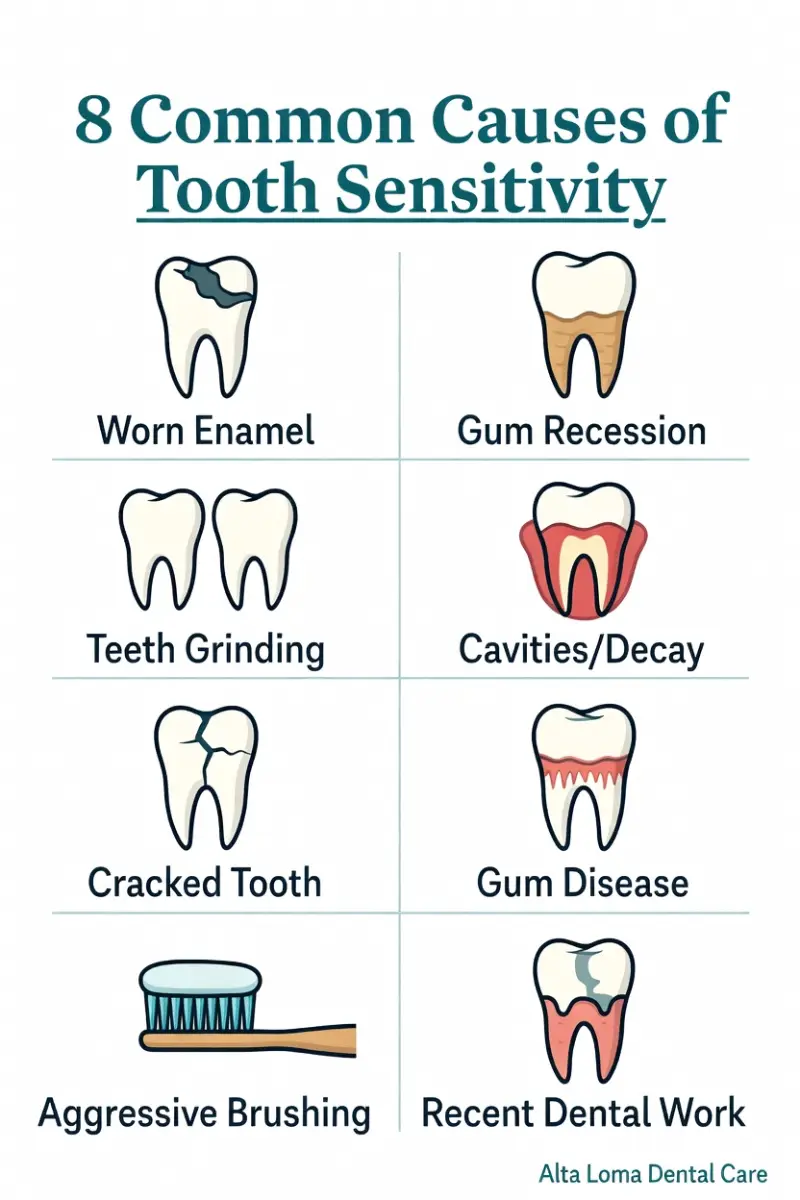
8 Common Causes of Tooth Sensitivity
Understanding what causes tooth sensitivity emergencies is the first step to preventing them. Common causes of tooth sensitivity include worn enamel or gum recession, cavities, recent dental work, gum disease, plaque buildup, teeth grinding (bruxism), and certain teeth whitening products. Here is a closer look at each:
1. Worn or Eroded Enamel
Enamel is the hardest substance in your body, but it is not indestructible. Acidic foods, aggressive brushing, and years of wear can break it down slowly. Once it is gone, it does not grow back — leaving your tooth’s nerves dangerously exposed.
2. Gum Recession
When your gums recede, the dentin underneath becomes exposed, where tiny nerve-filled channels carry sensory information to the tooth’s core. Hot, cold, sweet, or acidic foods can then trigger these nerves and cause stinging discomfort.
3. Teeth Grinding (Bruxism)
Many people grind their teeth at night without knowing it. Over time, this constant pressure wears down enamel and exposes the sensitive inner layers of the tooth. If you wake up with jaw pain or headaches, you may be grinding in your sleep.
4. Tooth Decay and Cavities
Tooth decay erodes enamel and exposes dentin. Early cavities may only cause sensitivity, while deeper decay can lead to infection. If decay is caught early, a simple filling may resolve the issue. If ignored, the problem can reach the nerve — making treatment far more complex and costly.
5. Cracked or Chipped Teeth
A crack in a tooth — even one you cannot see — can expose the inner layers and trigger sharp sensitivity. Discomfort when biting down can indicate a cracked tooth or structural damage, and cracked tooth treatment works best when done early, before the crack spreads or leads to infection.
6. Gum Disease
Swollen or infected gums from gum disease can expose tooth roots, making them extremely sensitive. Gum disease is one of the leading causes of tooth sensitivity emergencies because many patients do not realize they have it until the pain becomes severe.
7. Aggressive Brushing
Brushing too hard or using a stiff-bristled toothbrush can wear away enamel over time and irritate the gums, pulling them away from the roots. Use a soft-bristled brush and brush gently in circular motions.
8. Recent Dental Procedures
Sensitivity caused by dental work usually goes away on its own in a few weeks. This type of sensitivity is very common and expected. However, if the pain gets worse instead of better, contact your dentist right away.
When Is Tooth Sensitivity a Dental Emergency?
This is the most important question in this guide. Not every twinge of tooth pain requires an emergency visit — but some absolutely do. Tooth sensitivity isn’t usually a dental emergency, but there are situations where it could signal a more urgent problem.
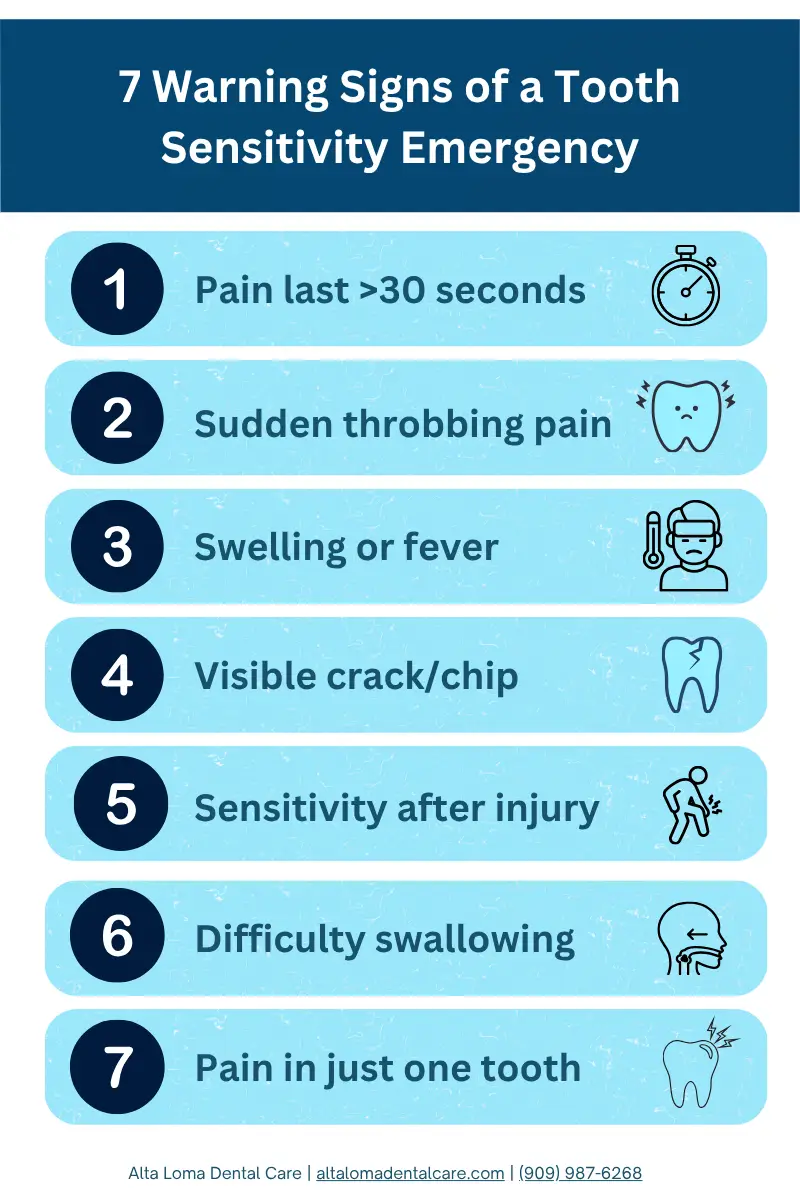
Here are the clear warning signs that mean you need to call a dentist right away:
🚨 Sign #1: Pain That Lasts More Than 30 Seconds
You should book an appointment if your tooth sensitivity lasts longer than 30 seconds after exposure, returns frequently, or is linked to pain when chewing. Pain that lingers well after the trigger is gone may mean the inner pulp of the tooth is irritated or damaged.
🚨 Sign #2: Sudden, Severe, or Throbbing Pain
If the sensitivity quickly escalates into intense, throbbing pain, it could indicate an abscess or infection. This kind of pain does not go away on its own — it only gets worse without treatment.
🚨 Sign #3: Swelling or Fever
Swelling around the affected tooth or gum, combined with a fever, is a clear indication of an infection. Infections can spread quickly if left untreated — do not wait to see a dentist.
🚨 Sign #4: Visible Crack, Chip, or Tooth Damage
If your tooth is visibly cracked, chipped, or broken, the exposed dentin or nerve can cause sharp sensitivity and needs urgent care. Even a hairline crack can worsen rapidly under chewing pressure.
🚨 Sign #5: Sensitivity After a Fall or Injury
If you have experienced a fall or impact, additional sensitivity might signal hidden damage to the tooth or tooth root. You may not see the damage from the outside, but the tooth’s internal structure could be compromised.
🚨 Sign #6: Difficulty Swallowing or Breathing
If you are experiencing difficulty swallowing or breathing, this could indicate swelling that is blocking your airway or spreading infection. This is a medical crisis, and you should go to an emergency care provider immediately.
🚨 Sign #7: Sensitivity Limited to Just One Tooth
Sensitivity isolated to one tooth may suggest a cavity, a loose filling, or a broken tooth emergency. These issues increase the risk of decay or infection if left untreated.
What to Do During a Tooth Sensitivity Emergency (Before You See the Dentist)
If you are in pain right now and cannot get to the dentist immediately, there are steps you can take to manage your discomfort safely at home. These are temporary measures only — they are not a substitute for professional dental care.
Step 1: Rinse With Warm Salt Water Rinsing your mouth with warm salt water helps reduce irritation and cleanse the area. Mix half a teaspoon of salt into eight ounces of warm water and gently swish for 30 seconds.
Step 2: Use Over-the-Counter Pain Relief Over-the-counter pain relievers like ibuprofen or acetaminophen can help temporarily ease the pain. Apply a cold compress to the outside of your cheek to reduce swelling. Do not place aspirin directly on the gum — this can burn the tissue.
Step 3: Avoid Triggering Foods and Drinks Stay away from extremely hot, cold, sweet, or acidic items until you are seen by a dentist. Avoid hot or cold foods and drinks. If the pain is unbearable, take over-the-counter pain relievers, but make sure to visit your dentist soon.
Step 4: Do Not Ignore the Pain It can be tempting to tough it out and hope the pain goes away. But tooth sensitivity emergencies rarely resolve themselves. Waiting can allow decay, infection, or structural damage to worsen — turning a manageable problem into a much bigger one.
Professional Treatments for Tooth Sensitivity Emergencies
When you visit Alta Loma Dental Care, your dentist will examine your teeth, take X-rays if needed, and recommend the right treatment based on what is causing your sensitivity. There is no one-size-fits-all solution — your care plan will be tailored to your exact situation. Here are the most common treatments:
Desensitizing Toothpaste and Fluoride Application
For mild sensitivity, desensitizing toothpaste contains compounds that help block transmission of sensation from the tooth surface to the nerve, and usually requires several applications before the sensitivity is reduced. Fluoride gel is an in-office technique which strengthens tooth enamel and reduces the transmission of sensations.
Dental Bonding, Sealants, or Crowns
If tooth sensitivity is caused by exposed dentin due to receding gums or enamel erosion, your dentist may recommend applying dental bonding or sealants to cover and protect the exposed surfaces. In more advanced cases, a crown or inlay can restore the damaged tooth and stop sensitivity at its source.
Surgical Gum Graft
If gum tissue has been lost from the root, a surgical gum graft will protect the root and reduce sensitivity. This procedure is highly effective for patients whose sensitivity is caused by significant gum recession.
Root Canal Therapy
If sensitivity is severe and persistent and cannot be treated by other means, your dentist may recommend a root canal to eliminate the problem. Despite its reputation, modern root canal therapy is a comfortable, routine procedure that relieves pain — not causes it. If the tooth’s nerve is affected, a root canal may be necessary to remove the infection and save the tooth.
Antibiotics or Abscess Drainage
For abscesses, antibiotics or drainage can eliminate the infection and relieve pain. If an infection is left untreated, it can spread to neighboring teeth, your jaw, or even other parts of your body — making early treatment absolutely critical.
How to Prevent Tooth Sensitivity Emergencies
The best emergency is the one that never happens. Here are the most effective ways to protect your teeth and reduce your risk of tooth sensitivity emergencies in the future:
✅ Brush Gently With a Soft-Bristled Toothbrush Hard brushing is one of the leading causes of enamel wear and gum recession. Switch to a soft brush and use gentle, circular strokes. Your enamel will thank you.
✅ Use Fluoride Toothpaste Fluoride can strengthen tooth enamel and help protect against sensitivity. Use fluoride toothpaste, and consider using a fluoride mouthwash or receiving professional fluoride treatments from your dentist.
✅ Limit Acidic Foods and Drinks Frequent consumption of acidic foods can reduce tooth enamel and lead to dentin exposure, causing tooth sensitivity. Sodas and candy are culprits, but so are citrus fruits, tomatoes, pickles, and other acidic foods. Rinse your mouth with water after eating these items.
✅ Wear a Night Guard If You Grind Your Teeth Teeth grinding and clenching lead to enamel wear and dentin exposure. Your dentist may recommend a bite guard or other treatment to protect your enamel. A custom-fitted night guard from Alta Loma Dental Care can preserve your enamel and stop grinding damage.
✅ Be Cautious With Whitening Products Be careful with teeth whitening — talk to your dentist about teeth whitening to make sure you are not damaging your teeth through whitening. Professional whitening under dental supervision is far safer than over-the-counter kits used without guidance.
✅ Keep Up With Regular Dental Checkups Preventive care catches problems early, often before sensitivity turns into pain. If tooth sensitivity is affecting how you eat, drink, or enjoy daily life, it is time to get answers. Routine exams allow your dentist to catch small issues before they become tooth sensitivity emergencies.
✅ Address Dental Problems Right Away If you have cavities, cracked teeth, or gum disease, seek treatment from your dentist as soon as possible. These dental problems can contribute to tooth sensitivity if left untreated.
Visit Alta Loma Dental Care for Tooth Sensitivity Emergencies
If you are experiencing tooth sensitivity — whether it is a dull ache or a sharp, sudden pain — do not wait to get it checked. During your visit, your dentist can diagnose the cause through a thorough exam and digital X-rays, and put together a care plan that gives you real, lasting relief.
At Alta Loma Dental Care, our team is experienced in handling tooth sensitivity emergencies with compassion, precision, and efficiency. We serve patients in Rancho Cucamonga and the surrounding Alta Loma community, and we are ready to help you get back to eating, drinking, and living without pain.
Don’t wait until a small twinge becomes a big problem. Call us today or visit our patient resources page to learn more about how we can help.
Alta Loma Dental Care is committed to providing patient-centered dental care in Rancho Cucamonga, CA. This blog is for educational purposes and is not a substitute for professional dental advice. If you are experiencing a dental emergency, please call our office or visit an emergency care provider immediately.